Most of us do not think of ourselves as the bad guys in the story.
The tenants in this parable certainly did not. They ran the temple. They knew the Scriptures. They had the right credentials, the right vestments, the right seats at the right tables. When the servants showed up asking for the Owner’s share of the harvest, the tenants were not confused. They were offended. This was their vineyard. They had worked it. The idea that someone else owned it, that they were stewards all along and never actually owners, was the one claim they would not accept.
Jesus tells this story on what was likely Tuesday of Passion Week. Two days from now he will be arrested. Three days from now he will be on a cross. He has just driven the money changers out of the temple, and the chief priests came demanding to know by what authority he was acting. He tells them a parable instead. By the end of it, they want to arrest him on the spot.
The story is not subtle. Jesus reaches into Isaiah 5.1–2, the song every priest in earshot had memorized since boyhood, and plays it back to them with a twist. Isaiah’s vineyard song indicts the fruit. This parable indicts the tenants. The vineyard is Israel. The Owner is the Lord. He invested everything in this place before a single grape appeared, then leased it and went away. He gave the tenants room to obey or rebel. They chose rebellion, slowly, over generations.
Harvest came. He sent servants to collect. The first was beaten. The second was humiliated. The third was killed. Then the long, sad refrain: he sent many others. Some they beat, and some they killed. From Moses to Malachi, that is the recurring shape of the prophetic narratives. The patience of God is not weakness. It is mercy stretched across centuries, hoping the tenants would finally hand over the fruit. They did not.
Then comes the line where the parable becomes autobiography.
ἕνα υἱὸν ἀγαπητόν (hena huion agapēton, “one beloved son”).1 That word ἀγαπητός (agapētos, “beloved”) rings in two other places in Mark. At the Jordan a voice tears through the sky: “You are my beloved Son. With you I am well pleased” (Mark 1.11). On the mountain of transfiguration the same voice speaks from a cloud: “This is my beloved Son. Listen to him” (Mark 9.7). Now Jesus stands in the temple and wraps himself in the same language in a story told to the men who will arrange his execution. The parable remains a parable, but Mark has already taught us who this beloved Son is.
The Father sends the one he cannot afford to lose. And in the parable’s own logic, the tenants kill him not because they misunderstand who he is, but because they understand him precisely. R. A. Cole put it plainly: it was precisely because they recognized him for who he was that they killed him.2 If he is the Son, the vineyard was never theirs. That is not a comfortable conclusion, and every generation finds its own way to avoid it.
But the parable does not end at the cross.
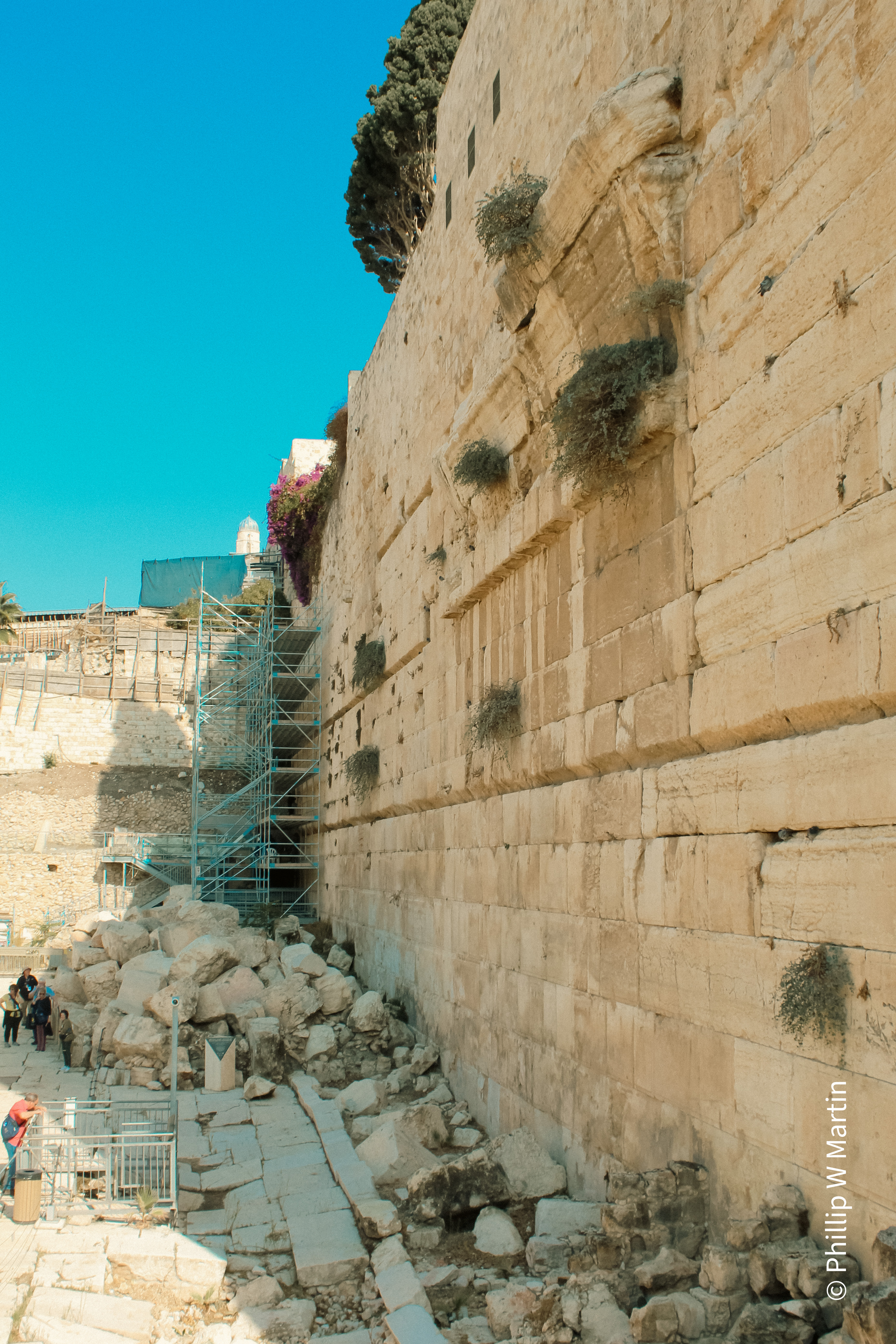
Jesus shifts the image from a vineyard to a building and quotes Psalm 118.22–23. The stone the builders rejected has become the cornerstone. Thinkers have long noted that in Hebrew, אֶבֶן (ʾeben, “stone”) and בֵּן (bēn, “son”) sound nearly the same.3 Whether or not the psalmist encoded the pun, the early church heard it, and Mark invites us to hear it too. The Son and the Stone are the same figure. The builders decided this stone was unusable and threw it aside. The Lord picked it up and set it at the head of the corner. Peter stood before the very Sanhedrin that arranged the crucifixion and quoted this verse directly at them in Acts 4.11. What they intended as disposal, God used as foundation.
The rejected stone does not become the cornerstone by staying buried. He comes out. The empty tomb is the moment the Father lifts what the builders discarded and sets it as the foundation of something the tenants never could have built. Hebrews 13.12 draws on the same pattern: Jesus suffered outside the gate, and the shame they intended became the place of sanctification.
The vineyard was not destroyed. The leadership changed hands. The new tenants are the ones who gladly render the harvest to the rightful Heir.
Whose vineyard are you working in, and who do you think holds the deed?
~PW 🌮🛶
You can find the full sermon transcript, video, and audio here: Mark 12.1–12, The Rejected Son
 Phillip W. Martin
Leave a comment