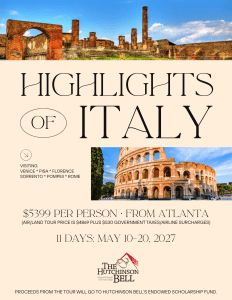
Hosted by Phillip Martin and Dr. David McClister A Hutchinson Bell Tour in partnership with Nawas International Travel
There is something that happens when you stand where history actually happened. You can read about the Roman Forum in a book. You can study Paul’s letter to the Romans in a Bible class and trace the arguments with a pen in the margin. But when you walk the same stones where senators debated and soldiers marched, when you stand in the city Paul addressed when he wrote “your faith is spoken of throughout the whole world” (Rom 1.8), something shifts. The text stops being ancient and starts being real.
That is the invitation of this trip.
Eleven days. Six cities. Venice, Pisa, Florence, Sorrento, Pompeii, and Rome. We will travel together through a world soaked in human history, artistic genius, and the unmistakable fingerprints of the God who spoke into existence everything we will see. We will also walk through some of the most significant biblical geography in the Western world. Rome is not a backdrop for the New Testament. Rome is in the New Testament. Early Christian tradition holds that Peter ended his ministry and died there. Most modern scholars find this probable, though the New Testament itself does not narrate it. Paul is consistently portrayed in early Christian sources as dying in Rome under Nero. The early church bled there and sang there and outlasted the empire.
Come with us.
The Details
- Dates: May 10-20, 2027 (11 days) Departing from: Atlanta, GA Cost: $5,399 per person (double occupancy), which includes round trip airfare, most meals, first class hotel accommodations, a professional English-speaking tour director, all admission fees, comprehensive sightseeing, and private motor-coach transfers.
- A $600 deposit per person secures your spot. Final payment is due January 20, 2027. Single room supplement is $1,150 extra per person (limited availability, first come first served).
- Proceeds from this tour benefit the Hutchinson Bell’s endowed scholarship fund.
- To register, send your completed reservation form and deposit check (made payable to Nawas International Travel) to:
- Mr. Phillip Martin, The Hutchinson Bell, 341 Wintersweet Way, Sharpsburg, GA 30277. You may also reach Phillip at (931) 349-2492 or pwmartin@gospeldefender.com.
Day 1: Monday, May 10, Depart Atlanta
The journey begins tonight. We board our overnight transatlantic flight and leave Atlanta behind. There is something quietly significant about that moment. The wheels lift, the city lights fall away, the Atlantic opens ahead in the dark. Travel does something to you before you even arrive. It reorders your sense of scale. Enjoy dinner on board and the onboard activities. Sleep if you can. Tomorrow, Venice.
Day 2: Tuesday, May 11, Arrive in Venice
We land in a city unlike any other on earth.
Venice is built on 118 small islands, some four kilometers from the Italian mainland. Its streets are water and its highways are canals, the islands stitched together by dozens of picturesque bridges into one impossible, magnificent whole. The city has existed in this form for over a millennium, and it has the texture of a place that has seen empires rise and fall from a position of unhurried indifference.
Upon arrival we transfer to our hotel on the mainland. Tonight is for settling in, for beginning to let the pace of the trip replace the pace of ordinary life. There is a reason travelers throughout history have written about the particular quality of light in Venice. You will see it for yourself.
Day 3: Wednesday, May 12, Venice
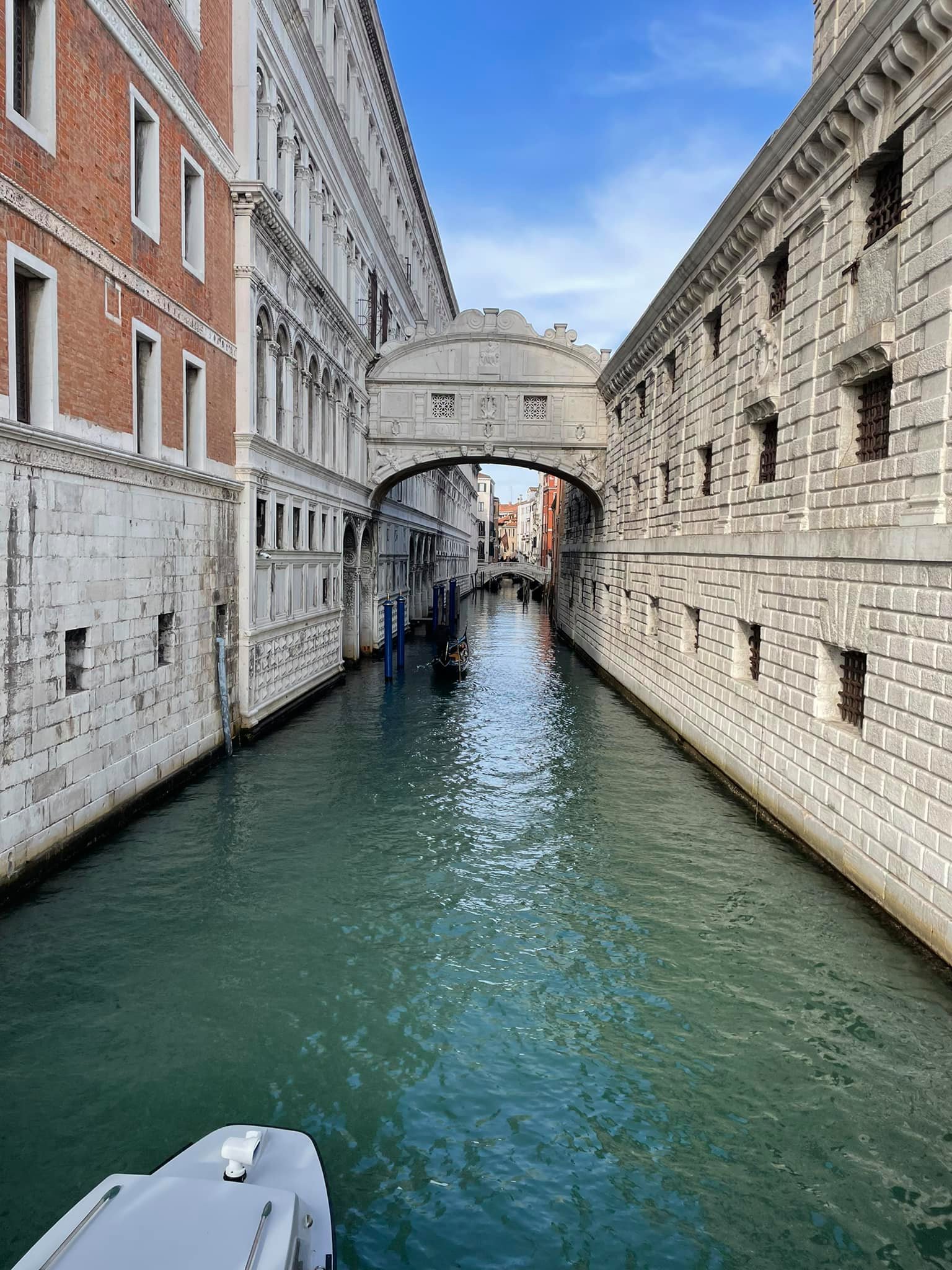
This morning we walk the island.
Our tour begins at the Basilica San Marco, one of the most recognized Byzantine church buildings in the world. It has stood at the eastern end of St. Mark’s Square since the ninth century, built originally to house the remains of the apostle Mark, brought here from Alexandria. The interior is a riot of gold mosaic that would have seemed to medieval visitors like a glimpse through heaven’s door. Whatever we make of the theological layers of history embedded in that building, there is no question it was built by people who believed that worship deserved the most beautiful things human hands could make.
We will also see the Palace of the Doges, the seat of Venetian political power for a thousand years, and the Bridge of Sighs, named for the sound condemned prisoners supposedly made when crossing it for the last time and catching their final glimpse of Venice through the stone windows. Then the Rialto, Venice’s oldest bridge, a graceful arch of white stone over the Grand Canal that has anchored the commercial heart of the city since the sixteenth century.
The afternoon is yours. Let Venice reveal itself on your terms. Get lost. Find a cafe. Sit by the canal. There is no wrong way to spend a free afternoon in Venice.
Day 4: Thursday, May 13, Venice / Pisa / Florence
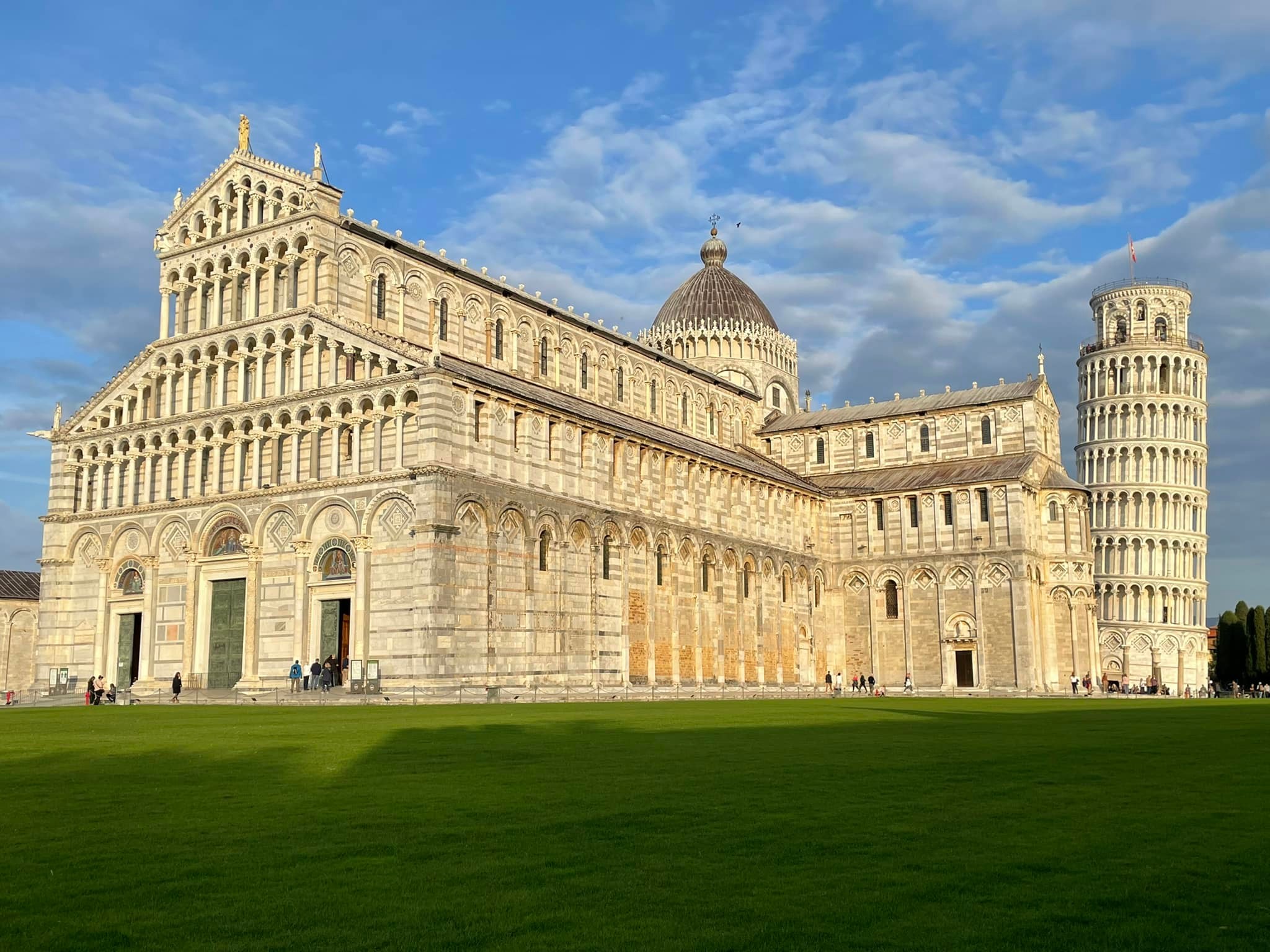
We leave Venice this morning and drive through the Tuscan countryside.
Tuscany does something to a person. Rolling hills give way to vineyards, with cypress trees standing like sentinels along the ridgelines. The landscape looks designed. And in a real sense it was. Generations of Italian farmers shaped this land over centuries, and what looks natural is the result of patient, deliberate human work. Beauty often is.
We stop in Pisa to see the Cathedral Square and the famous Leaning Tower, which has been tilting since construction began in 1173. It leans because the soil beneath the foundation is soft on one side. The engineers who built it noticed the problem almost immediately and have been working around it ever since. It is now one of the most visited structures in Italy, beloved specifically because of its flaw. There is a sermon somewhere in that.
From Pisa we continue to Florence, the city many historians consider the birthplace of the modern Western world. The Medici family ruled here and used their wealth to fund artists, scholars, and architects who shifted the course of civilization. From Botticelli to Da Vinci to Michelangelo, Florence was where the Renaissance blazed brightest. We arrive and settle in for two nights.
Day 5: Friday, May 14, Florence
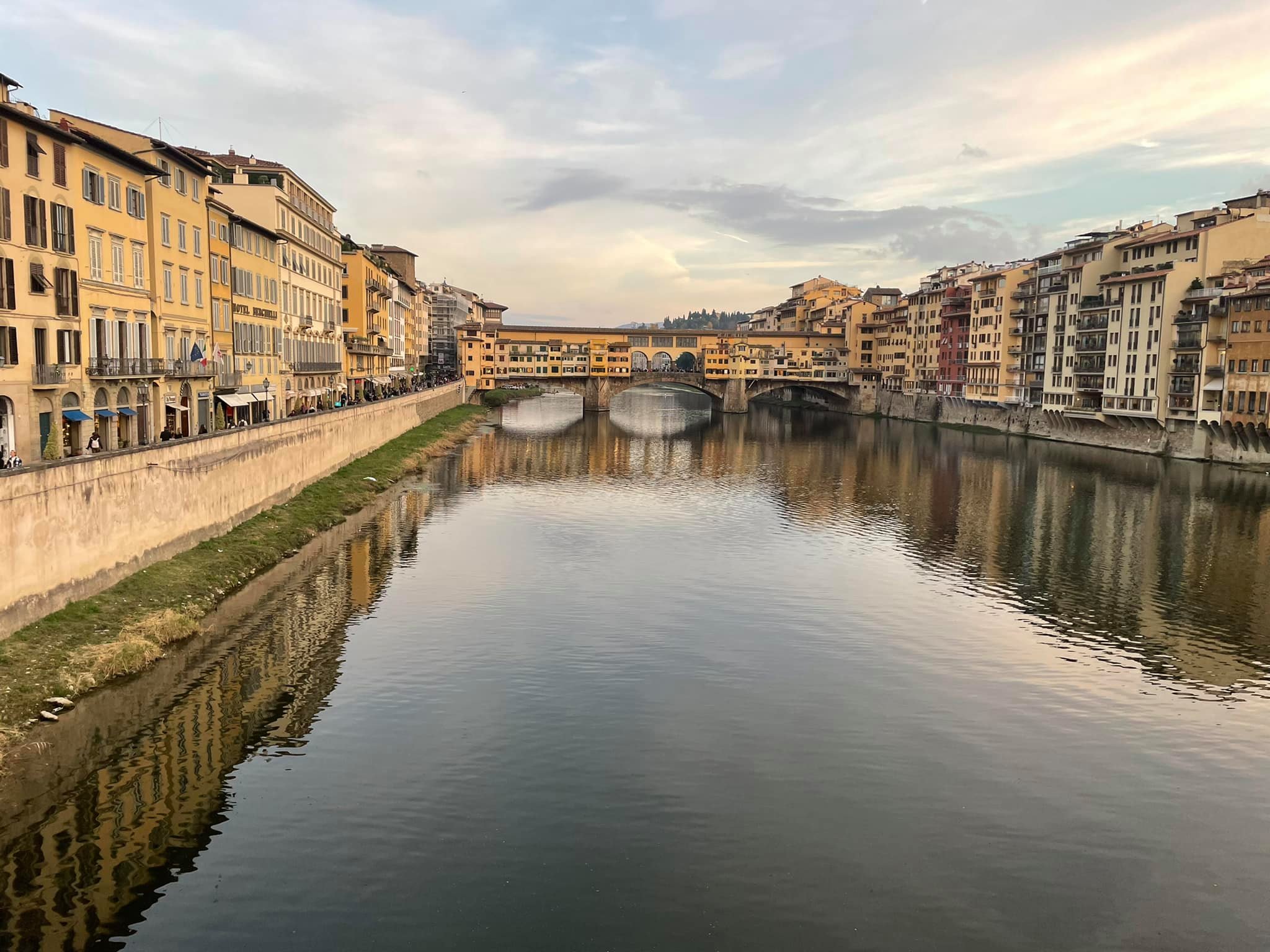
Today we give Florence the time it deserves.
This morning’s walking tour moves through the Piazza della Signoria, the great outdoor public square that has been the political heart of Florence since the fourteenth century. The Neptune Fountain anchors one end, the Palazzo Vecchio looms at the other, and copies of great Renaissance sculptures stand in between. This is the room where Florence did its thinking out loud, in marble and stone.
We visit the Church of Santa Croce, one of the largest Franciscan churches in the world and the burial place of Michelangelo, Galileo, Machiavelli, and others. Florence is the kind of city where even the tombs are worth studying. Then the Baptistry of San Giovanni, whose famous east doors Michelangelo himself called the “Gates of Paradise”: Lorenzo Ghiberti’s gilded bronze panels depicting scenes from the Old Testament in extraordinary detail. We also visit Giotto’s Bell Tower, which stands beside the Cathedral and has been measuring out the hours of Florentine life since the fourteenth century.
The highlight of the morning is the Accademia Gallery, which houses Michelangelo’s original statue of David. No photograph prepares you for it. The piece stands seventeen feet tall in white marble, capturing a specific moment before the battle. His face is set. The sling hangs loose in his hand. Michelangelo said he simply removed everything from the block of marble that was not David. That is one way to describe what a life given to God looks like. The unnecessary things fall away until what remains is the image God always intended.
From the Piazzale Michelangelo we take in a panoramic view of the city and the Arno Valley. Then the afternoon is free. The Ponte Vecchio bridge lined with jewelers’ shops is worth a slow walk. So is almost any direction you choose to walk in Florence.
Day 6: Saturday, May 15, Florence to Sorrento
We leave Florence today and drive south.
The landscape changes as we move into the Neapolitan countryside. The terrain grows more dramatic, the coast comes into view, and eventually the road climbs to Sorrento, perched on the cliffs above the Bay of Naples. The town sits 160 feet above the sea on a tableland of volcanic rock, and on a clear day you can see Vesuvius brooding across the bay.
Sorrento is a gateway. From here we will reach Pompeii and the Amalfi Coast and, eventually, Rome. But tonight, Sorrento itself is worth your full attention. The air smells of lemon and the sea. The light changes slowly over the bay. We settle in for two nights.
Day 7: Sunday, May 16, Sorrento / Amalfi Coastline / Sorrento
The Amalfi Coast is one of those places that makes you feel the creation’s extravagance.
The road winds along sheer cliffs above the Mediterranean, past towns clinging to the rock face and terraced orchards of lemon and olive, with sea views that seem like paintings. That is simply what this part of the world looks like. This stretch of coastline has been declared a UNESCO World Heritage Site, and the designation is apt. It is, without qualification, one of the most beautiful places on earth.
Paul sailed these waters. The Mediterranean was the circulatory system of the ancient world. Ships carried goods, people, and news across this sea. The gospel followed those same routes. When we read in Acts about Paul’s voyages, the sea beneath him was this sea. The light was this light.
We return to Sorrento in the afternoon, where you can see a demonstration of Intarsia, the region’s traditional wood inlay craft that uses dozens of varieties of wood to produce images of extraordinary detail. There is free time to shop for the fine linens and ceramics Sorrento is known for.
Day 8: Monday, May 17, Sorrento / Pompeii / Rome
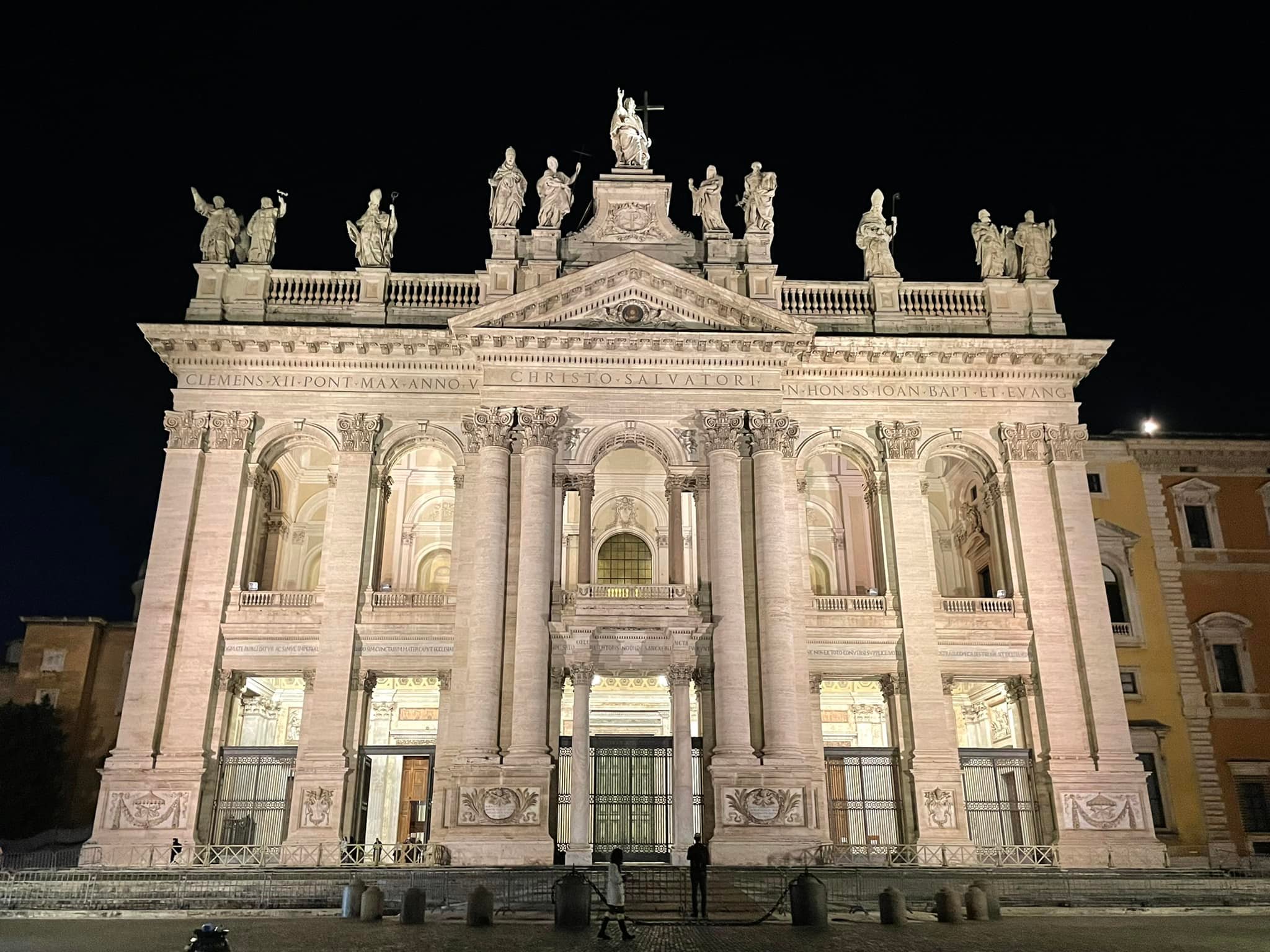
This is one of the most sobering days of the trip.
We depart this morning for Pompeii, the city that simply stopped. In 79 AD, traditionally dated to August 24 though some recent archaeological evidence suggests an autumn eruption, Mount Vesuvius erupted and buried Pompeii under nearly twenty feet of volcanic ash and pumice. The city of roughly 11,000 to 15,000 people was sealed in place, preserved by the very catastrophe that destroyed it.
When excavations began in the eighteenth century, they found a city mid-sentence. Bread still in the ovens. Election campaign graffiti still on the walls. Families huddled in houses where they had sheltered from the ash, now preserved as plaster casts of the space their bodies left behind. It is deeply unsettling. Not morbid, but clarifying.
Roughly a generation before that eruption, Paul had sailed this coast on his way to Rome (Acts 27-28), stopping at Puteoli just a few miles away, where he found brothers who welcomed him for a week before he continued to the city. The world we walk through at Pompeii is the world that formed the backdrop of the New Testament letters. These are the temples, the baths, the public spaces, the architecture that Paul’s readers lived inside. And in the year 79 AD, while some of those readers were perhaps still alive, God buried it.
Moses wrote that we are to consider the years of many generations, to ask the ancient questions about the endurance of human things against the permanence of God (Deut 32.7). Pompeii raises those questions with more force than almost anywhere on earth.
From Pompeii we travel north along the Autostrada to Rome. We arrive in the Eternal City tonight.
Day 9: Tuesday, May 18, Rome: Vatican and Ancient City
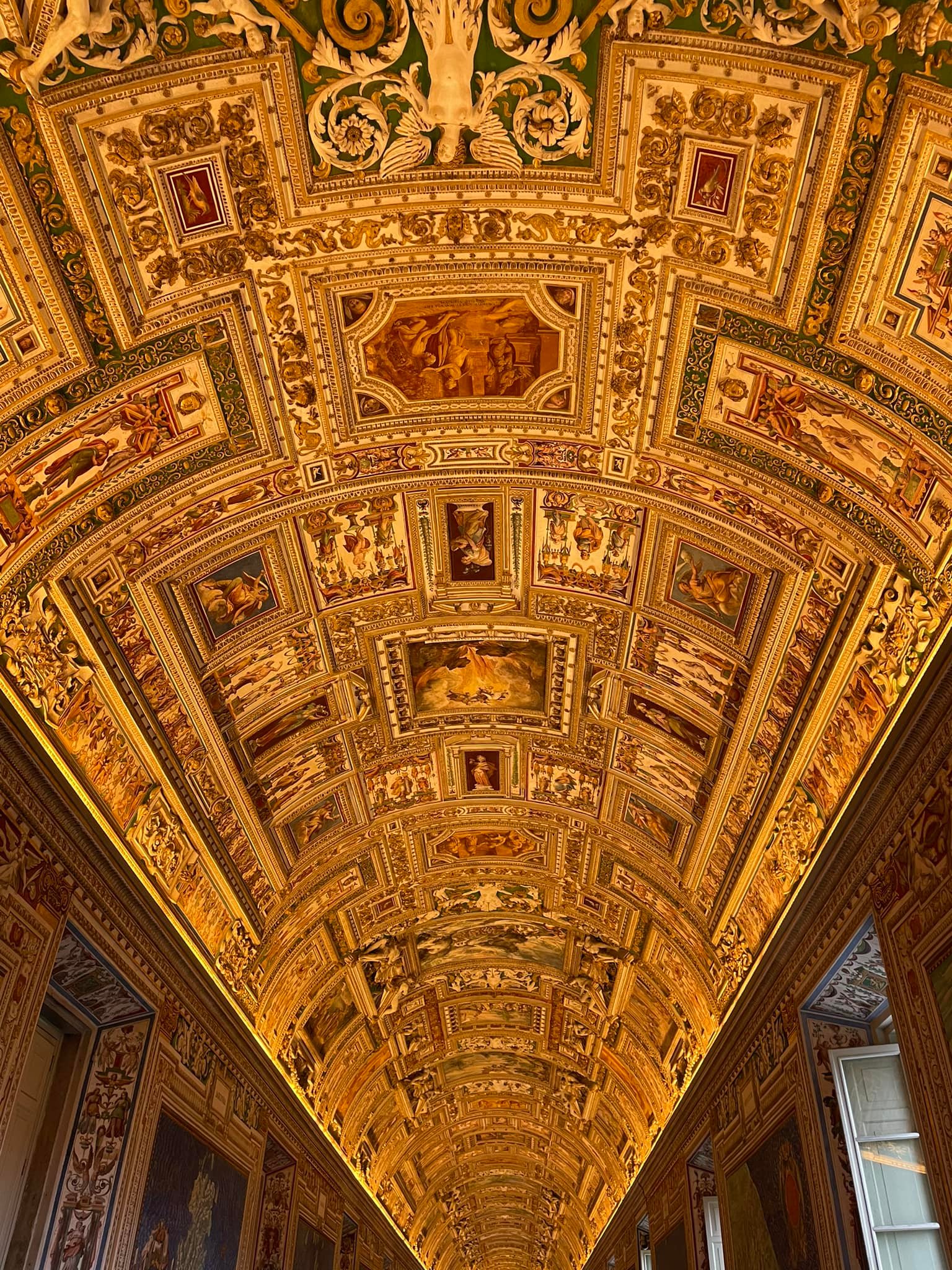
Rome is not a museum. It is a living city built on top of itself for nearly three thousand years, and the weight of that accumulation is something you feel before you understand it.
This morning we go to Vatican City. The Vatican Museums house one of the world’s great art collections, centuries of acquisition and preservation concentrated in an extraordinary complex. We make our way through to the Sistine Chapel, where Michelangelo spent four years on his back painting the vault of a ceiling. The ceiling depicts the sweep of Genesis, from creation to Noah, with the famous image of the Lord’s hand extended toward Adam at the center. The Last Judgment fills the altar wall, painted by Michelangelo decades later, older and less certain of easy answers than the young man who had carved David in marble.
Whatever we think about the institution that commissioned these works, the art forces questions on us about creation, human dignity, and judgment, and what we hope for beyond death. That is worth something.
We conclude the morning at the Basilica of St. Peter. The scale is difficult to describe. The building is the largest church structure in Christendom, and every dimension of it was designed to communicate one thing: this matters. We may read that history with complicated feelings, as those of us connected to the restoration movement should. But we can engage it honestly, which is more useful than avoiding it.
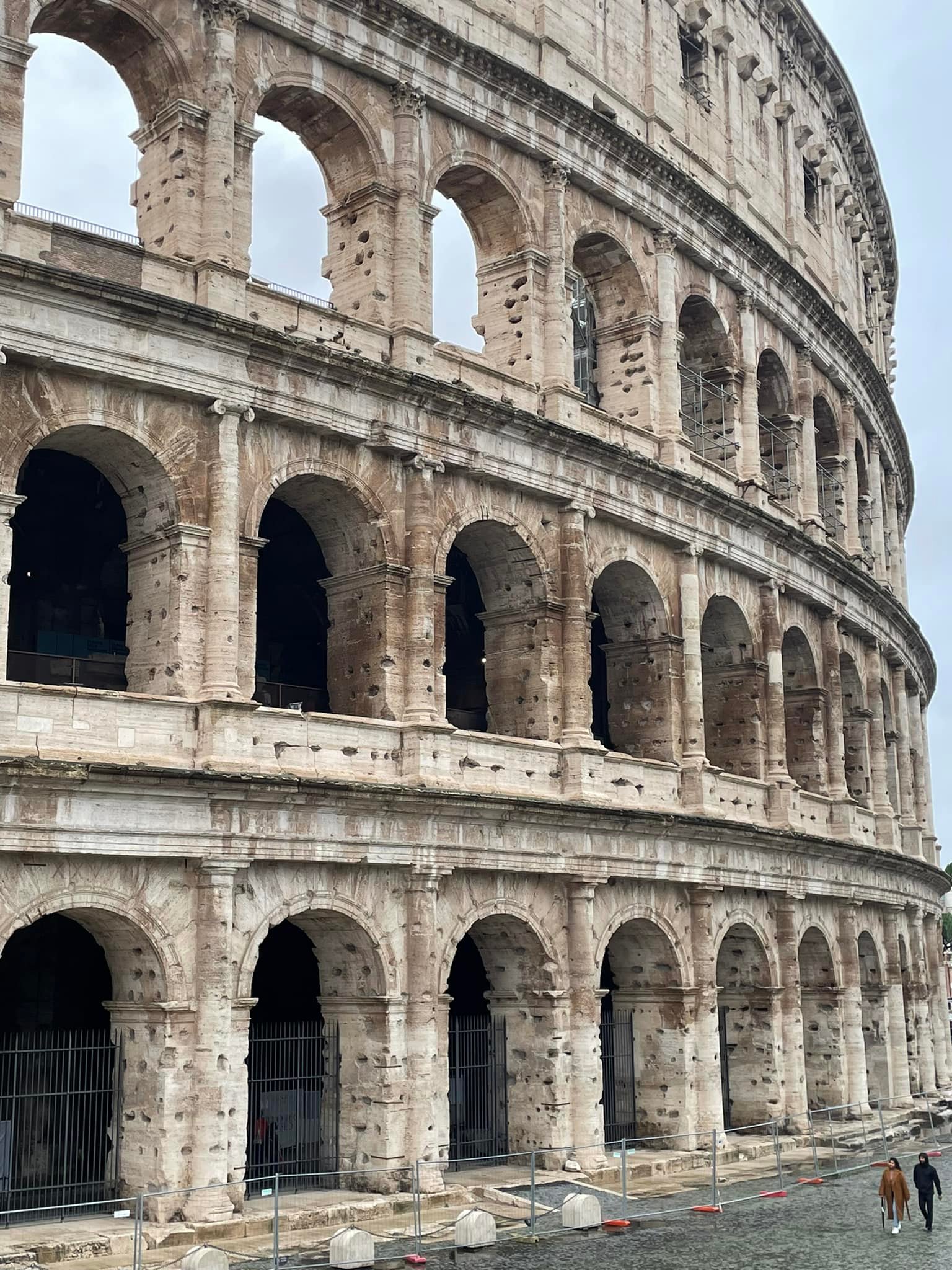
This afternoon we tour Ancient Rome, the original city beneath the Christian overlay. The Colosseum held around 50,000 spectators and was the site of gladiatorial games, animal hunts, and public executions. Christians were executed in Roman arenas throughout the empire, and later Christian memory strongly associates this amphitheater with martyrdom, though historians debate the specific evidence for this particular site. What is not in doubt is the broader reality: the early church was considered a threat to Roman social order, and Rome dealt with threats in the arena.
We also visit the Mamertine Prison, the ancient detention facility at the foot of the Capitoline Hill where tradition holds that the apostles Peter and Paul were imprisoned before their executions. Whatever precision we assign to that tradition, the building is real, the executions are historical, and we stand in the city where both men died for their conviction that Jesus of Nazareth was Lord. Paul wrote the letter to the Romans from Corinth before he had ever visited Rome. He wrote to people living inside the city we are now standing in, people who were surrounded by everything Rome was and claimed to be. And he told them that the gospel was the power of God for salvation, that he was not ashamed of it, that in Christ there was a righteousness God himself provided (Rom 1.16-17). Those words landed in this city. Today we stand in this city too.
Day 10: Wednesday, May 19, Rome: A Day at Leisure
Rome gives you everything today and asks nothing of you except attention.
The city has more than four hundred churches. You could spend a month inside them and not exhaust what they contain. The Via Veneto sweeps north from the center in the tree-lined boulevard that became famous in the twentieth century for its cafes and the particular kind of stylish idleness that Rome does better than anywhere. The Spanish Steps descend from the Trinita dei Monti church in a cascade of 135 steps built in the eighteenth century, and on a warm May afternoon they will be full of people simply being in a beautiful place together.
Find a trattoria for lunch. Walk until your feet make you stop. Go back to something you saw yesterday that you want more time with. Rome has been receiving visitors for three thousand years and knows how to make room for you.
Day 11: Thursday, May 20, Rome / Atlanta
This morning we say goodbye to Rome.
We transfer to the airport and board our return flight to Atlanta, arriving later that same day. You carry more home than you brought. More than photographs and the good tiredness of real travel, you carry a world slightly widened. You have walked streets Paul walked. You have seen the sea the early church sailed. You have stood on the stones of the city where the gospel took root and spread across the Western world.
The Bible will read differently when you return. That is not a small thing.
Why This Trip
David McClister has spent his career helping people understand the New Testament world and the text that came from it. Phillip Martin has spent his ministry helping people understand that faith is not an idea to hold but a life to live. Together, they will lead this journey not as tour guides but as teachers and fellow travelers, ready to help you see what there is to see and to think through what it means.
The Hutchinson Bell exists to strengthen Florida College and the work it does. The proceeds from this tour go directly to that endowed scholarship fund. When you come with us, you travel and you give. The student who receives a scholarship because of this trip will never know what you did. That is exactly the kind of giving Jesus described as right-handed work the left hand doesn’t know about (Matt 6.3).
Come with us. Eleven days across a world that shaped both Western history and the faith we carry inside it.
To reserve your place: Complete the reservation form and send your $600 per person deposit (check payable to Nawas International Travel) to Mr. Phillip Martin, The Hutchinson Bell, 341 Wintersweet Way, Sharpsburg, GA 30277. Questions? Call (931) 349-2492 or email pwmartin@gospeldefender.com.
Final payment due: January 20, 2027.
For full terms and conditions, visit nawas.com/terms-and-conditions2027.

