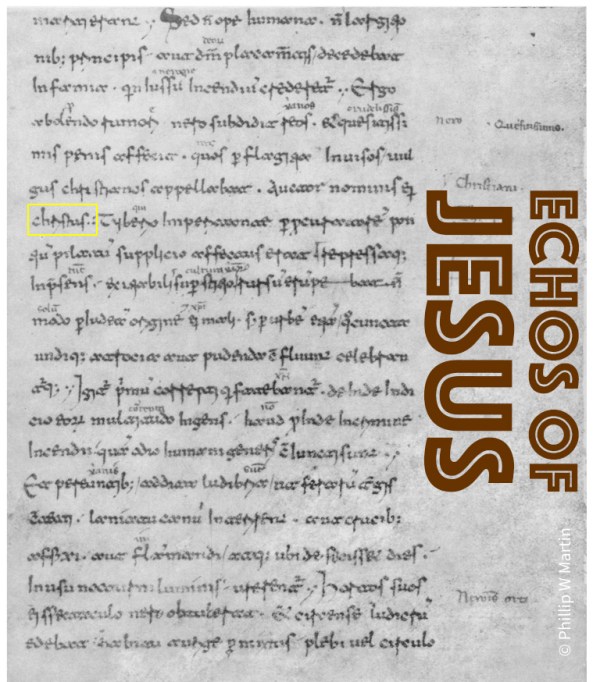
Folio from Codex Mediceus II (Biblioteca Medicea Laurenziana, Plut. 68.2), an 11th-century Latin manuscript preserving Annals 11–16 by Tacitus. This codex is the earliest surviving manuscript that contains Annals 15.44, the passage describing Nero’s punishment of Christians following the fire of Rome. For many a seeker's heart, the question "Did Jesus of Nazareth really live?"... Continue Reading →
Everywhere and Still Empty
This photograph shows the ruins of the Roman theater at Sebaste, rebuilt by Herod the Great on the site of ancient Samaria in the late first century BCE and renamed for Augustus. Archaeological evidence suggests it dates to the early Roman Imperial period and hosted dramatic performances, civic gatherings, and public ceremonies. These theaters shaped... Continue Reading →
From Manger to Skull
BiblePlaces.com. (n.d.). Stone feeding trough (manger), typical of first-century Judea We prefer our saviors at a distance. Close enough to help, far enough not to expose. Scripture offers no such Messiah. It gives us one who comes near and stays. There is no Golgotha if there is no Bethlehem. The cross does not appear suddenly... Continue Reading →
Leadership
Great Isaiah Scroll (1QIsaᵃ), The Israel Museum, Jerusalem, Shrine of the Book, This scroll is the oldest complete manuscript of Isaiah we have, preserved in Hebrew and dated by scholars to the late second century BCE, and it includes Isaiah 52–53. Leadership is learned. Leaders listen. Leaders lead. We all face moments when we're called... Continue Reading →
Philemon 1-25, From Slave to Brother
Papyrus 87 (𝔓87), Philemon 13–15. P. Col. theol. 12, Köln, Institut für Altertumskunde. CSNTM. Paul writes from prison with an impossible request. He is sending back a runaway slave named Onesimus to his master Philemon, asking him to receive Onesimus not as property but as a brother. Under Roman law, Philemon had absolute authority over... Continue Reading →