For many a seeker’s heart, the question “Did Jesus of Nazareth really live?” stirs deep thoughts. It helps to know that we’re not alone in asking. Alongside the Gospels, ancient writers, even some centuries removed, mention him by name. Their dry-sounding accounts can read like distant echoes in a vast canyon. Yet each one is a stone in a mosaic of history. It’s as if we open old scrolls by candlelight and discover that Roman and Greek thinkers, Jewish historians, and even skeptical critics all picked up the scent of the same story. By looking at these historical trails with an honest eye, we notice how facts and faith intersect. Belief, after all, shapes the heart, and the life of Jesus continues to stir questions and hope in our own lives.
Roman and Jewish Witnesses
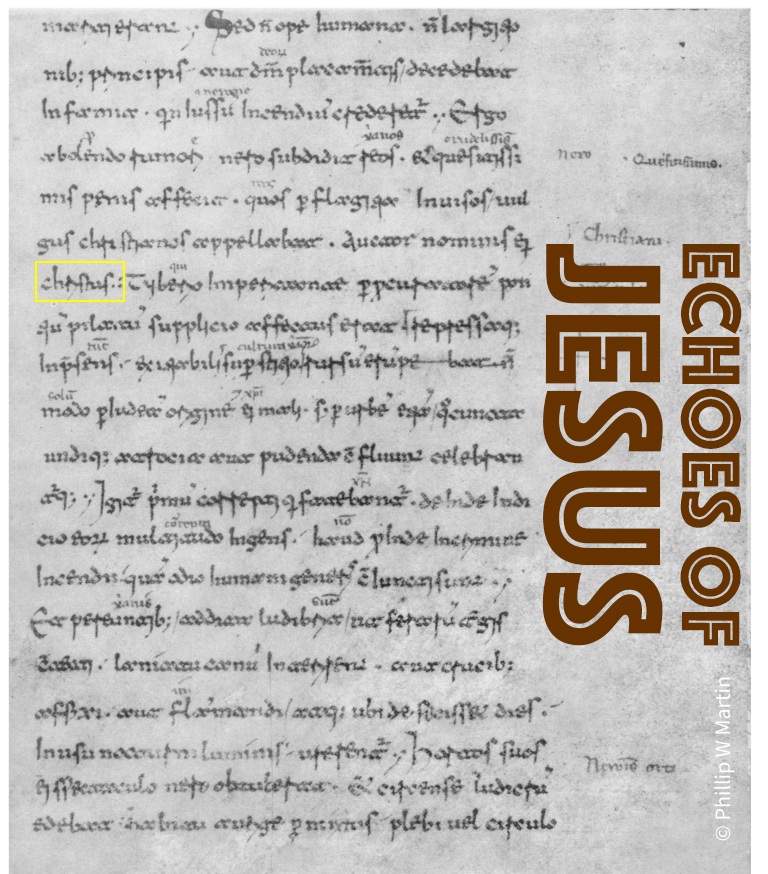
Tacitus, a Roman senator writing around AD 115, reports a scandal in Nero’s time and mentions “Christus” (Christ) by name. He writes that Christ “suffered the extreme penalty” under Pontius Pilate1. This was the Roman phrase for crucifixion. In plain language, Tacitus, no friend of the Church, confirms that there was a man called Christ executed under Pilate.
Likewise, the Jewish historian Josephus (Antiquities 18.3.3) speaks of “Jesus, a wise man… whom Pilate… condemned to the cross.”2 Scholars note that some phrases were likely added by later Christian copyists, but most think Josephus wrote a core notice about Jesus. He likely mentioned his role as a teacher, his following, and his condemnation under Pilate.
Across the empire in Bithynia, Pliny the Younger (Letters 10.96) describes Christian worship around AD 112: he tells Emperor Trajan that Christians sang hymns to “Christ… as though he were a god.”3 Even these pagans recognized that Jesus’s followers treated him as divine.
Emperor Claudius (recounted by Suetonius, Claudius 25.4) expelled Jews over disturbances “at the instigation of Chrestus,” which many scholars think refers to disputes about Christ among Roman Jews, though the passage isn’t entirely clear.4 Suetonius later notes Nero punished Christians for a “new and mischievous superstition.”5
Each of these historical records, Tacitus, Josephus, Pliny, Suetonius, pieces together a remarkably consistent picture: a preacher from Judea named Jesus, crucified under Pilate, sparking a devoted movement.
Voices from Across the Mediterranean
Across the Mediterranean, the testimony continues. Lucian of Samosata, a sharp-witted 2nd-century Greek satirist, wrote about a sect that “deny the gods of Greece, worship the crucified sage, and live after his laws.”6 Here, Lucian mocks Christians, yet the words reveal that Jesus was known as the crucified sage. That is, a wise teacher executed by the authorities.
In Syria, a thoughtful Stoic named Mara Bar-Serapion (writing sometime in the late first or second century) wrote to his son about wise men killed by tyrants. He asks, “What advantage did the Jews gain from executing their wise king? It was just after that their kingdom was abolished.“7 He never names Jesus, but many scholars see this reference to a “wise king of the Jews” as an allusion to Jesus’s fate.
Even early believers left writings outside the New Testament. First Clement, a letter from the Church at Rome (around AD 95), exhorts Christians: “Let us fear the Lord Jesus Christ, whose blood was given for us” (1 Clement 21:6).8 Here the author treats Jesus as the living Lord, not a mythic symbol. In other words, within a generation of Jesus’s life, Christian writers publicly invoked his name and impact as real.
Even Critics Acknowledged Him
Beyond those who honored him, ancient critics did not ignore Jesus either. Origen, a 3rd-century Christian theologian, preserves the words of Celsus, a contemporary philosopher hostile to Christianity. Celsus scornfully claims Jesus was “born in a certain Jewish village… of a poor woman… who… gave birth to Jesus, an illegitimate child” and that he only “proclaimed himself a God” after learning magic in Egypt.9 Though we dismiss the bitterness of that claim, it nonetheless confirms that even adversaries of the faith believed Jesus had walked the earth. Otherwise, why invent such a personal slur?
Other threads come from reports of cosmic signs. Julius Africanus (AD 220) cites earlier historians Thallus and Phlegon who mentioned an unusual eclipse and earthquake during Tiberius’s reign.10 Africanus and later Christians interpret these as corresponding to the Gospel accounts of darkness at the crucifixion, though the link and details remain debated among scholars.
Each reference, whether friendly or hostile, passing casual mention or elaborate narrative, tells a consistent story: someone named Jesus of Nazareth lived, taught, and was crucified under the Roman procurator Pilate.
What Do We Make of All This?
We stand at the foot of a mountain of history, and these citations are like markers on a trail rather than a sealed destination. Each source is brief and from far away, but together they form a surprising consensus in ancient records. They remind us that the person of Jesus was no secret of the early Christians alone; he brushed up against the wider world.
I believe that such evidence is meant to lead inward: true belief isn’t merely intellectual assent but reshapes the heart. All of Scripture points to Jesus, and here we see that even outside Scripture, history itself seems to point back to him. These clues can ignite a spark of trust. Jesus is central to our growth and sanctification, so acknowledging his real-life story is the first step to letting that story change us.
In the end, the question is personal. If after hearing about Tacitus and Josephus and Pliny, after seeing echoes in Lucian’s satire or Mara’s letter, your heart still wonders “What now?” take it as an invitation, not a requirement to jump. Faith is about entering into Jesus’s life, not just ticking off proofs. Maybe these old words have done some work on you: they show that Jesus mattered to people then; imagine what he could mean to you now.
The story doesn’t end in the textbooks; it continues in real lives. Consider that the same Jesus whose name we saw on these pages is alive in the pages of the living Gospel. Perhaps today you will decide to trust him, to put your life under the Lord Jesus Christ, whose very life and death these sources point toward. If so, you will be part of this unfolding story, living out the hope that countless hearts have found in Him.
~PW 🌮🛶References
- Tacitus, P. C. (c. 116 CE). Annals (15.44). ↩︎
- Josephus, F. (c. 93–94 CE). Antiquities of the Jews (18.3.3). ↩︎
- Pliny the Younger. (c. 112 CE). Letters (10.96). ↩︎
- Suetonius, G. T. (c. 121 CE). Lives of the Caesars: Claudius (25.4). ↩︎
- Suetonius, G. T. (c. 121 CE). Lives of the Caesars: Nero (16). ↩︎
- Lucian of Samosata. (c. 165 CE). The Passing of Peregrinus. ↩︎
- Mara bar-Serapion. (late 1st–3rd c. CE). Letter to Serapion. ↩︎
- Clement of Rome. (c. 95 CE). First Epistle to the Corinthians (1 Clem. 21.6). ↩︎
- Origen. (c. 248 CE). Contra Celsum (citing Celsus, c. 177–180 CE). ↩︎
- Julius Africanus. (c. 220 CE). Chronography (citing Thallus and Phlegon). ↩︎


Leave a comment