I have watched this over my life. A man takes apart a weak argument and then walks away from the wreckage. He does not build anything in its place. In some cases I do not think he ever meant to.
Sometimes that is honest folly. He mistook the demolition for the whole job. But often the rubble is the point. He tells you his conclusion is the reasoned one. Disagree, and you are the one refusing wisdom. The confidence is real. The building is nowhere.
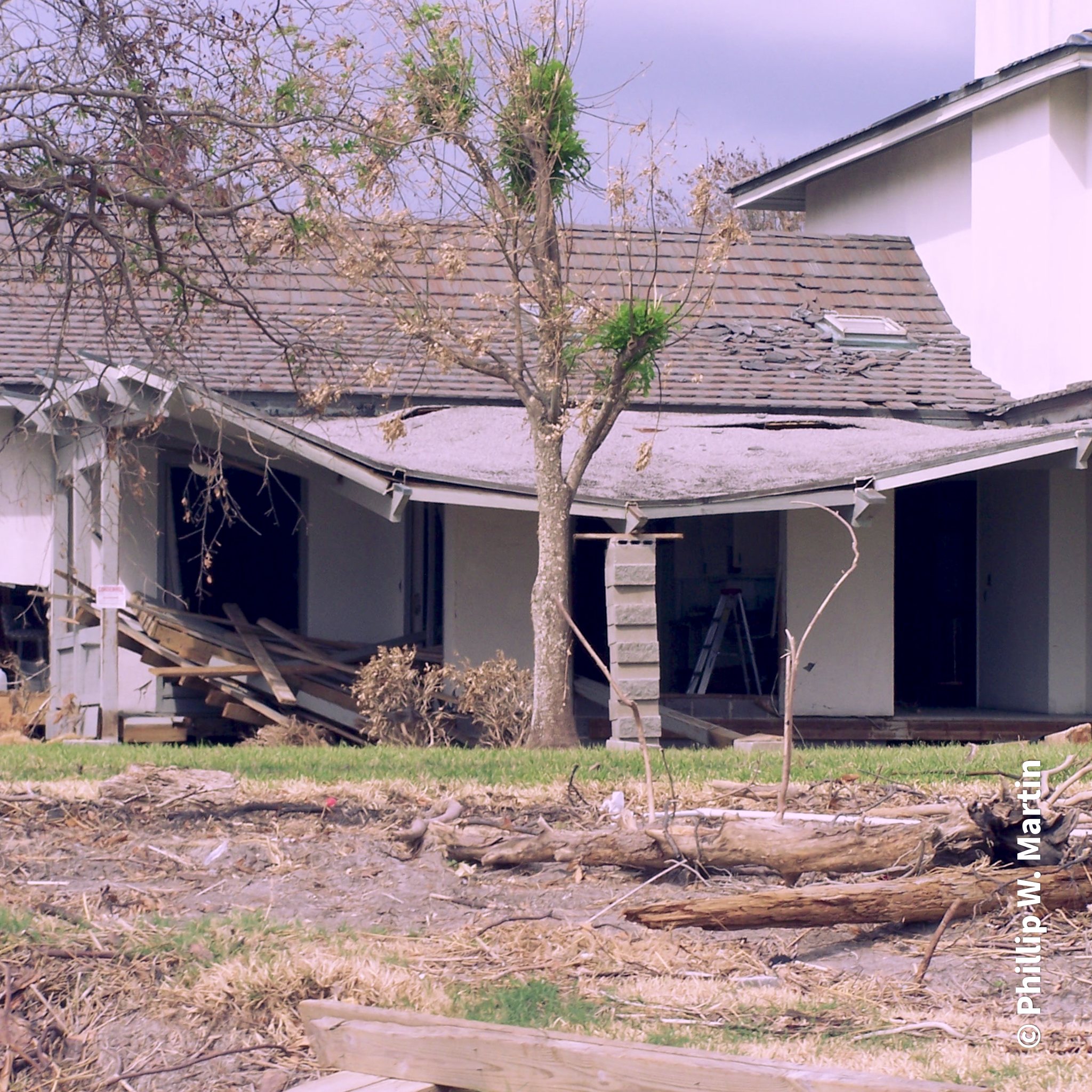
I want you to notice how God worded the commission.
“See, I have set you this day over nations and over kingdoms, to pluck up and to break down, to destroy and to overthrow, to build and to plant.” (Jeremiah 1.10, ESV)
Four verbs come down. Two go up. And the sentence does not end with the wrecking. Jeremiah is not sent to leave Judah in a heap and call that faithfulness. The uprooting serves the planting. Tearing down is the front half of a calling, and the man who stops there has not finished the work. He quit in the middle of it.
So the question was never whether anything deserves to come down. Jeremiah clarifies that. Answer the bad argument. Expose the corrupt habit. The question is whether you came to build.
That question lives in the daily orbit of my life. I write. I teach. Nobody is better positioned to mistake tearing down for teaching than a man with a microphone and a reading list.
Here is the cycle, and maybe you have experienced it too. He finds the weakest version of a position and beats it. He mistakes exposure for understanding. He treats a crack in your argument as proof of his own conclusion, as though the collapse of one house furnished another. He calls your hesitation backwardness and never makes the positive case. And he gains something by it. He becomes the man who sees through everything.
Plato saw the shape of this a long time ago. In the Gorgias, Socrates refuses to call rhetoric an art. He calls it kolakeia, flattery.1 Cookery dressed up as medicine.2 It gives the room what tastes good and leaves nobody healthier. Public criticism works the same way. It can make an audience feel discerning without making one person in it wiser or better able to love a neighbor. A crowd that enjoys watching you win is not a soul that has been fed.
Paul puts the standard where it belongs.
“According to the grace of God given to me, like a skilled master builder I laid a foundation, and someone else is building upon it. Let each one take care how he builds upon it. For no one can lay a foundation other than that which is laid, which is Jesus Christ.” (1 Corinthians 3.10–11)
Take care how he builds. Not whether he can find fault with the last man’s wall. Paul assumes an inspection is coming, and he assumes it falls on the builder.
So before you tear something down, answer the builder’s questions. What goes in its place? What do you believe about God and about people that makes your replacement better than what you removed? What does it look like on a Tuesday, at a kitchen table, when your daughter asks you why? What will it cost, and who pays for it? Can an ordinary disciple with a job and two kids in car seats actually live in the world you are proposing? If you cannot answer those, you have not offered a better way. You have offered a hole.
Marcus Aurelius, who had every excuse to theorize, wrote this to himself: “No longer talk at all about the kind of man that a good man ought to be, but be such.”3 He was not against thinking. He spent his life at it. He was against the substitution. Naming everyone else’s failure is not showing what faithfulness looks like, and a man can do the first for forty years without once attempting the second.
Here is the distinction I keep coming back to. The reformer tears down because he means to build. The cynic tears down because rubble excuses him from building. The prophet uproots and overthrows. Then he builds and plants.
Criticism that never plants anything has a name in Scripture. Qoheleth calls it hebel, and BDB gives you the concrete sense: vapor, breath, what you can see and cannot hold.4 It looks like substance in the cold morning air. Reach for it and your hand closes on nothing.
“Vanity of vanities, says the Preacher, vanity of vanities! All is vanity.” (Ecclesiastes 1.2)
A man can spend an entire life making other people doubt and leave them nothing to stand on. Clever, and empty. So put the harder question to your own work, as I am putting it to mine. Not what have I disproved. What have I built? Who is standing on something solid today because I did the work?
The world does not need more demolition experts. It needs someone willing to stay on the site after the dust settles.
~PW 🌮🛶
BIBLIOGRAPHY
- Brown, Francis, S. R. Driver, and Charles A. Briggs. A Hebrew and English Lexicon of the Old Testament. Oxford: Clarendon Press, 1906.
- Marcus Aurelius. The Thoughts of the Emperor M. Aurelius Antoninus. Translated by George Long. London: Bell and Daldy, 1862.
- Plato. Lysis, Symposium, Gorgias. Translated by W. R. M. Lamb. Loeb Classical Library 166. Cambridge, MA: Harvard University Press, 1925.
- Plato, Gorgias 463a–b, in Lysis, Symposium, Gorgias, trans. W. R. M. Lamb, Loeb Classical Library 166 (Cambridge, MA: Harvard University Press, 1925). Socrates calls rhetoric “a pursuit that is not a matter of art, but showing a shrewd, gallant spirit which has a natural bent for clever dealing with mankind,” and sums up its substance “in the name flattery.” ↩︎
- Plato, Gorgias 465c. “As self-adornment is to gymnastic, so is sophistry to legislation; and as cookery is to medicine, so is rhetoric to justice.” ↩︎
- Marcus Aurelius, The Thoughts of the Emperor M. Aurelius Antoninus, trans. George Long (London: Bell and Daldy, 1862), 10.16. ↩︎
- Francis Brown, S. R. Driver, and Charles A. Briggs, A Hebrew and English Lexicon of the Old Testament (Oxford: Clarendon Press, 1906), s.v. “הֶבֶל.” ↩︎
 Phillip W. Martin
Leave a comment