I think most of us come to the Beatitudes with a pen in our hand.
We read the list and start checking. Poor in spirit, working on it. Meek, trying. Pure in heart, not quite but I am getting better. We turn the Sermon on the Mount into a performance review, and we walk away from it either proud of our progress or quietly convinced we will never measure up. Either way, we have missed the point entirely.
The problem is not effort. The problem is the category. We have read a portrait as a policy manual.
Jesus has something to say about that.
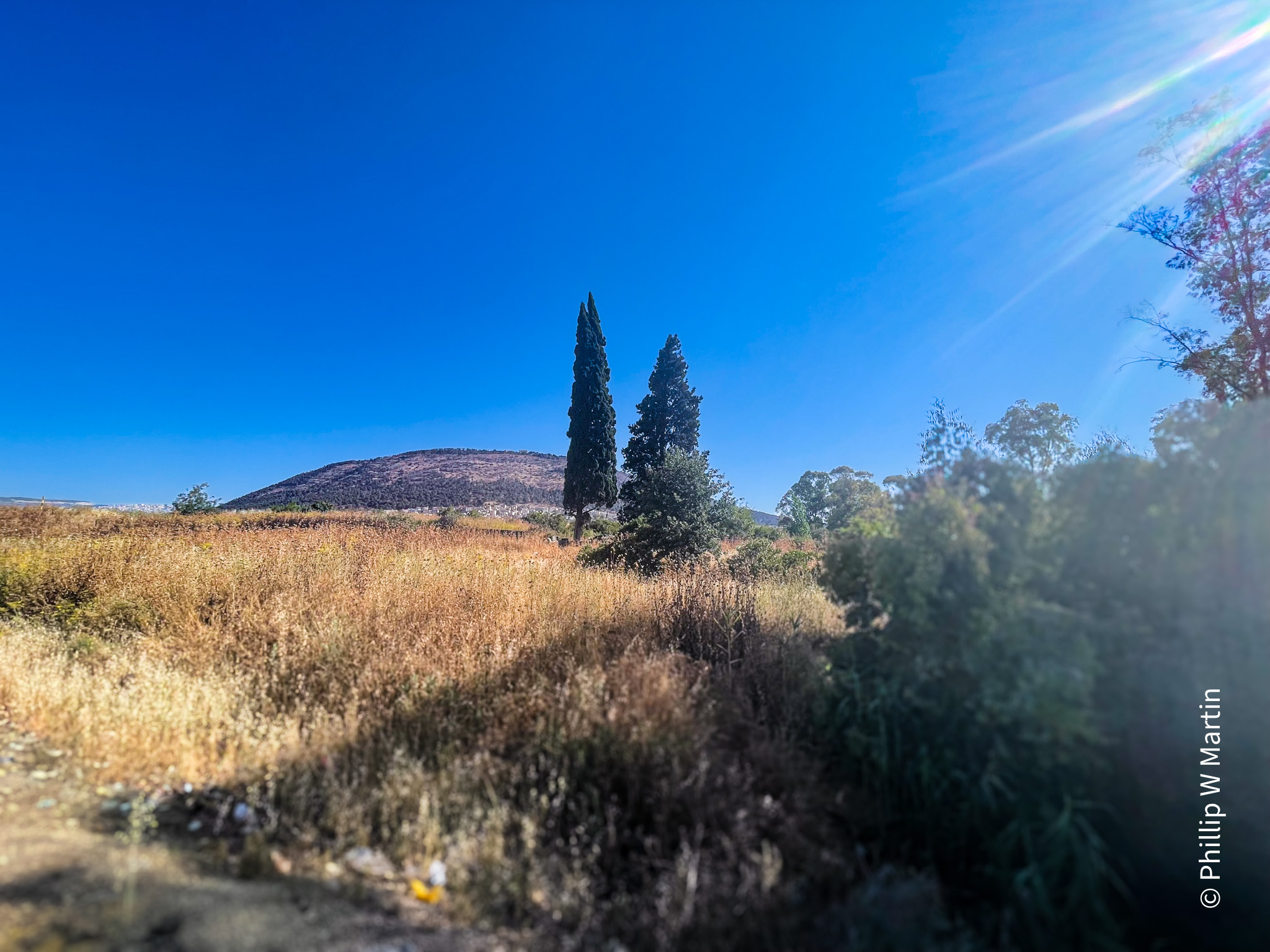
In Matthew 5.1–12, Matthew frames the scene with deliberate care. Jesus goes up a mountain. He sits down. That posture is not incidental. In the ancient world, a seated teacher signals that what is coming carries weight. The disciples draw near. And the first word out of the King’s mouth is not a command. It is a blessing.
Μακάριος (makarios, “blessed”) is not simply “happy.” Happiness rises and falls with circumstance. This word was used to describe the gods of the empire, those who lacked nothing. Jesus reclaims it. He pulls it out of the hands of Rome and places it over the ones no empire would honor. The poor in spirit. The mourners. The meek. The spiritually famished.
That is not what you expect from a newly inaugurated King.
The first four Beatitudes follow an arc worth tracing.
- Poverty of spirit: I cannot solve my deepest problem on my own.
- Mourning: I can name what that problem is, and its name is sin, and when I look at a world broken by it, grief is the honest response.
- Meekness: the problem is not my circumstances or the people around me. The problem is me.
- Hunger and thirst for righteousness: I want the right thing badly enough to stop settling for substitutes.
This is not religious self-improvement, It is collapse. It is the person who has come to the end of themselves and found, to their astonishment, that the King is already there.
Then the second four Beatitudes describe what flows outward from that inner poverty.
- Mercy toward others, because the person who knows how much they have been forgiven stops keeping score.
- Purity of heart, καθαρός (katharos, “undivided, uncontaminated”), the heart with one allegiance at its center.
- Peacemaking, which is not conflict avoidance but the costly work of moving toward broken relationships and absorbing the hostility.
- And finally, persecution, because faithfulness in a world that wants your compromise will eventually cost you something.
The structure is not a ladder, It is a painting. Eight brushstrokes forming one face.
And here is the thing Matthew is doing that we almost always walk past.
That face belongs to Jesus.
- The poor in spirit: “he did not count equality with God a thing to be grasped, but emptied himself” (Phil 2.6–7).
- The mourner: “Jesus wept” (John 11.35). He was a man of sorrows, acquainted with grief (Isa 53.3).
- The meek: “I am meek and lowly in heart” (Matt 11.29). He entered Jerusalem not on a war horse but on a donkey.
- The one who hungers for righteousness: “My food is to do the will of him who sent me” (John 4.34).
- The merciful: he touched lepers, ate with tax collectors, said from the cross, “Father, forgive them.”
- The pure in heart: the one who sees the Father (John 1.18), who never sought his own glory, who refused every temptation to divide his allegiance.
- The peacemaker: “he himself is our peace” (Eph 2.14), who broke down the dividing wall of hostility in his own body.
- The persecuted: mocked, stripped, crucified on the charge of being a king.
The Beatitudes are not what God requires of you before he blesses you. They are a portrait of the one who came down to be blessed among you, and through whom the blessing flows.
Jesus does not say, “Be blessed if.” He says, “Blessed are.” He is announcing a reality that is already true for the ones who belong to him. The poor in spirit already hold the kingdom. Not because they earned it. Because the King came to the poor, not to the proud.
And every promise in the list is future tense. They shall be comforted. They shall inherit the earth. They shall see God. That future tense is not a threat. It is a guarantee. The world says the broken have nothing. Jesus says the full weight of what he promised is still on its way, and it is not going to miss you.
G.K. Chesterton was once asked to address the question, “What is the problem with the universe?” In response, he succinctly stated, “The problem with the universe is me. Signed, G.K. Chesterton.”
That is poverty of spirit. And it is, in the Sermon on the Mount, the first word into the kingdom.
Come to him empty. That is all he asks. He blesses the broken because he was broken for us.
~PW 🌮🛶
You can find the full sermon transcript, video, and audio here: Matthew 5.1–12, Blessed and Broken
 Phillip W. Martin
Leave a comment