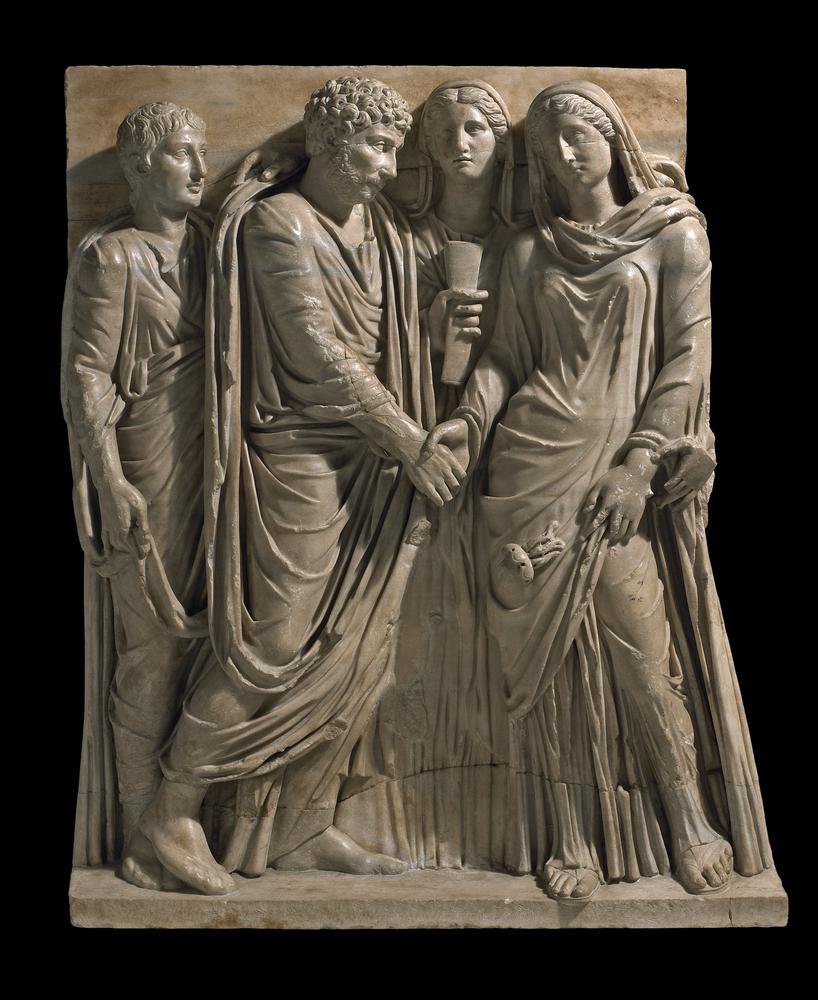
Churches today feel pressure to rethink almost everything about leadership. That pressure is not all bad; it can push us back into Scripture to ask what God actually says about who should serve as overseers. One of the flashpoints is Paul’s phrase in 1 Timothy 3.2, often translated “the husband of one wife.” Does this language simply require sexual faithfulness from anyone who serves, or does it also assume that overseers are qualified men?
“Husband of One Wife”
In 1 Timothy 3.2, Paul says that an overseer must be μιᾶς γυναικὸς ἄνδρα, literally “a one-woman man.” Most interpreters agree that this idiom highlights marital and sexual fidelity rather than building a rigid rule about marital status or remarriage. The issue is not whether a man has ever been widowed, divorced, or remained single, but whether he is known, in the present, as faithful and above reproach in his relationships with women. Worth noting: ancient inscriptions and 1 Timothy 5.9 show the parallel phrase “woman of one man” used as a character commendation for women, which means the idiom itself does not function as a male-only formula in every context. That observation does not settle the elder-gender question, but it means the phrase is better read as a morally demanding, lexically flexible description that specifies what kind of man is in view rather than as the sole proof that overseers must be men.
What the idiom does underline is that ἀνήρ and γυνή are not neutral terms. They are the ordinary Greek words for man and woman, husband and wife. Paul is describing a man who is faithful to his wife, and that sexed character of the phrase is not incidental.
The verses just before 1 Timothy 3 matter for how we read it. In 1 Timothy 2.12–13, Paul restricts a certain kind of teaching and authority over men to men, and he grounds that instruction in creation, appealing to Adam and Eve rather than to local Ephesian customs. On a complementarian reading, he is not solving a temporary local crisis but reasoning from the way God ordered man and woman in Genesis. Many egalitarian scholars contest this, arguing Paul is addressing specific false teaching in Ephesus and that the creation appeal is rhetorical rather than trans-cultural legislation. That debate is live and serious.
What can be said with more confidence is that Paul moves directly from this creation-rooted discussion into qualifications for overseers without any signal that he is widening or reversing what he just said. For many readers, the overseer office in chapter 3 corresponds naturally to the sphere of teaching and governing that chapter 2 has just addressed. That is a theologically plausible and widely held reading, even if it is not the only possible one.
“If Anyone Aspires”
Paul opens the section by saying, “If anyone (τις) aspires to the office of overseer…” (1 Timothy 3.1). The pronoun τις is formally indefinite and could, in other contexts, refer to a woman or a man. Some egalitarian arguments rest significant weight here, suggesting the door is open to anyone who desires the work.
Greek, however, commonly opens with a broad τις and then immediately specifies the person in view. That is exactly what happens in 3.1–7: the “anyone” is defined right away as a “one-woman man,” followed by masculine participles and a social setting that presumes a male householder with responsibility for wife and children. The indefinite pronoun does not carry the theological weight; the description that follows does the narrowing. At the same time, masculine grammatical forms regularly function generically in Koine Greek, so the forms alone cannot settle the question. The argument rests on the cumulative shape of the passage, particularly “one-woman man,” read alongside 1 Timothy 2.12–13 and the parallel language in Titus 1.
Across the Pastoral Epistles, elders are linked with “one-woman man” language and tied to household management and the teaching of sound doctrine. In Titus 2, older men and older women are both given rich, honored roles, but they are not interchangeable: older women teach and train younger women; elders guard doctrine and rebuke error. On a complementarian reading, the simplest conclusion is that Paul assumes elders and overseers are qualified men, even as he expects women to play indispensable roles in the life of the church. Egalitarian scholars reading the same texts draw different conclusions, pointing to figures like Priscilla, Phoebe, Junia, and other Spirit‑gifted women as evidence that women exercised significant teaching and leading roles in the earliest churches. Their exegesis deserves careful, respectful response; yet even after weighing these passages, I remain persuaded that Paul reserves the overseer/elder office itself for qualified men while honoring women’s essential teaching and ministry work in other spheres.
Christ, the True “One Bride” Man
It is possible to use texts like 1 Timothy 3 in harsh or careless ways, and those sins do real damage. Still, after the dust of debate settles, the case that Paul intends overseers to be qualified men remains exegetically serious and historically well-grounded, even if it is contested by thoughtful, Scripture-honoring readers.
Underneath the discussion of church offices stands Christ himself. He is the true “one-bride” man, completely faithful to his people, never wandering, never half-committed. Where men have abused authority or chased impurity, he remained pure and laid down his life. Where women and men have sought worth mainly in public roles, he offers a deeper identity, rooted in being loved and chosen in him.
Take time with 1 Timothy 2–3, and instead of asking first, “What does this allow me to do?” ask, “What kind of heart is Jesus forming through this pattern?” The glory of his body is not that every member does the same thing, but that every member, male and female, is honored in the work he actually assigns.
~PW 🌮🛶
*For the basic meanings of the Greek terms in this passage, I am drawing on standard lexicons such as A Greek–English Lexicon of the New Testament and Other Early Christian Literature (BDAG). There, anēr is defined as an adult male or husband, gynē as an adult female or wife, and the pronoun tis as an indefinite “someone/anyone,” with context determining whether a man or a woman is in view.
 Phillip W. Martin
Leave a comment