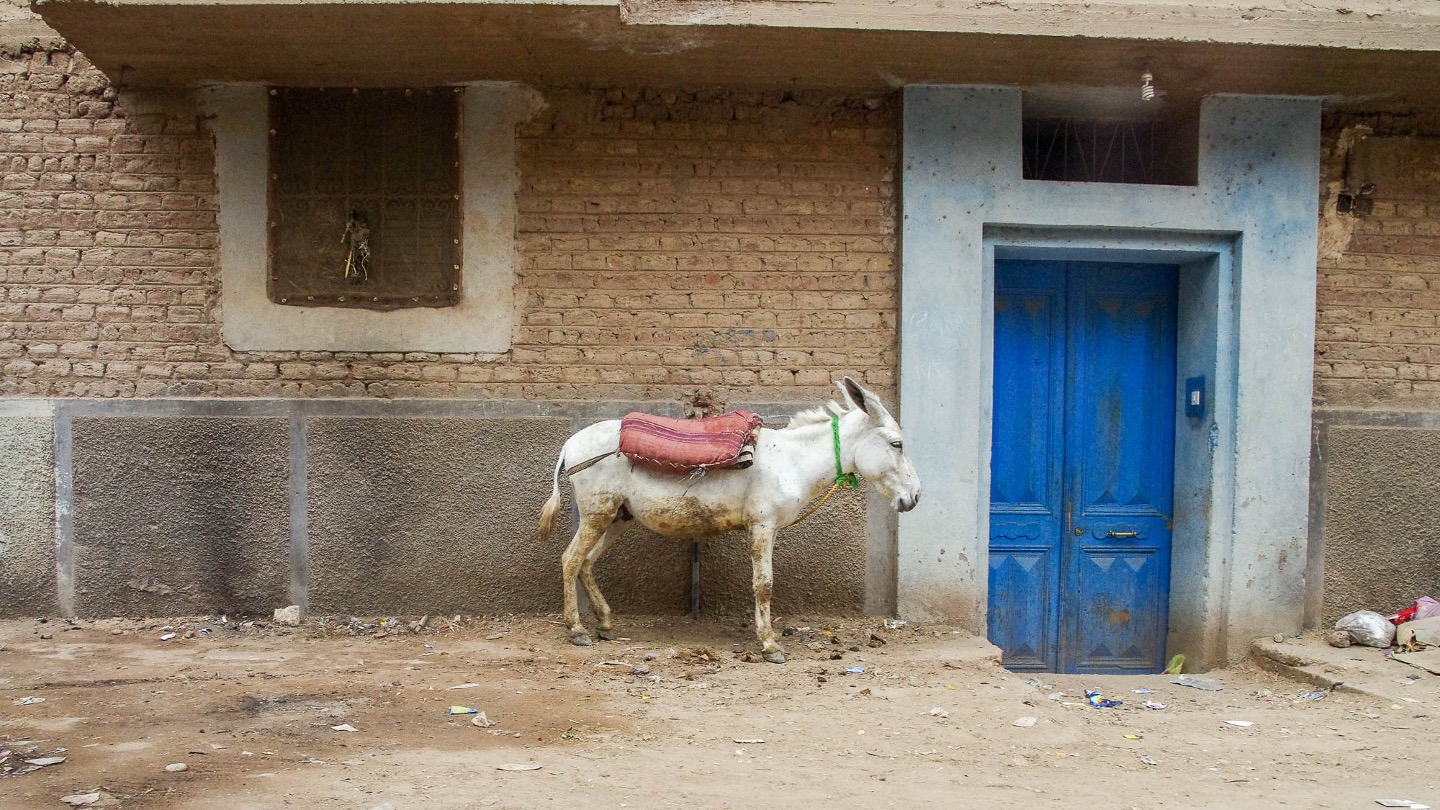
It is easy to picture the scene. One man riding a donkey from the east, followed by crowds waving palm branches and shouting “Hosanna to the Son of David!” (Matthew 21:9). Another, likely entering from the west, backed by a column of soldiers, banners and armor—there to remind everyone that Caesar was still king, no matter what the crowds thought.
There is no ancient source that lines their arrivals up on the same day, but the pressure of Passover week in Jerusalem makes the contrast hard to ignore. Pilate did not usually stay in Jerusalem. He came up from Caesarea for festivals in case things got out of hand—and they often did.1
Jesus rides in from the Mount of Olives (Matthew 21:1), fulfilling Zechariah’s old words about a king who comes “humble and mounted on a donkey” (Zechariah 9:9). Not with threats. Not with displays. But with borrowed transportation, clothes for a saddle, and a kingdom that turns everything upside down.
Pilate came with strength, and Jesus came with surrender. One entered to suppress rebellion, and the other entered, knowing he would be crushed. And yet, by Friday, only one of those processions was still standing.
That is the irony of the cross. Jesus is mocked with a crown of thorns (Matthew 27:29), beaten and dragged outside the city gates (Hebrews 13:12), and nailed to a tree (Acts 5:30). But through that, he wins. Not by defeating Rome, but by carrying the full weight of sin and death (Isaiah 53:5–6). What looked like weakness was the power of God on full display (1 Corinthians 1:18).
And this is where Paul picks up the thread. He says God “always leads us in triumphal procession in Christ” (2 Corinthians 2:14). But he does not mean we look triumphant. He means we have been conquered. Captured by grace. Brought along as living proof that Jesus wins by dying. And now, wherever we go, we carry that scent—“the aroma of Christ to God among those who are being saved and among those who are perishing” (2 Corinthians 2:15).
The garden of Eden became a garden of fear, but in Gethsemane, Jesus says, “Not as I will, but as you will” (Matthew 26:39). Adam and Eve covered their shame with fig leaves and hid behind the trees (Genesis 3:7–8). Jesus hangs naked on one (Galatians 3:13). Thorns were part of the curse (Genesis 3:18), and Jesus wore them on his head. Adam and Eve were sent away from paradise. Jesus turns to a dying thief and says, “Today you will be with me in paradise” (Luke 23:43).
That’s the procession Paul is caught up in. Not marching behind a war horse but following the one who rode a donkey. Not led by force but by a king whose power looked like a failure. It is a strange way to win. However, that is the story we have been caught up in.
Now, like Paul, we carry that same scent. Some will find it sweet. Others will not. But either way, the triumph keeps moving. And the question we are left with is the same one Jerusalem had to answer. Which king are we following?
~PW 🌮🛶
Borg, M. J., & Crossan, J. D. (2007). The Last Week: What the Gospels Really Teach About Jesus’s Final Days in Jerusalem. HarperOne.
- While the Gospels do not mention Pontius Pilate’s arrival in Jerusalem during Passover, historical precedent affirms that Roman governors (including Pilate) traveled from their residence in Caesarea Maritima to Jerusalem during major Jewish festivals to oversee security and suppress unrest. Pilate’s entrance from the west is presented by Borg and Crossan as a deliberate display of imperial power, contrasting sharply with Jesus’ peaceful procession from the east. This interpretive contrast underscores the theological and political tension between the kingdom of Caesar and the kingdom of God (Borg & Crossan, 2006). ↩︎
 Phillip W. Martin
Leave a comment