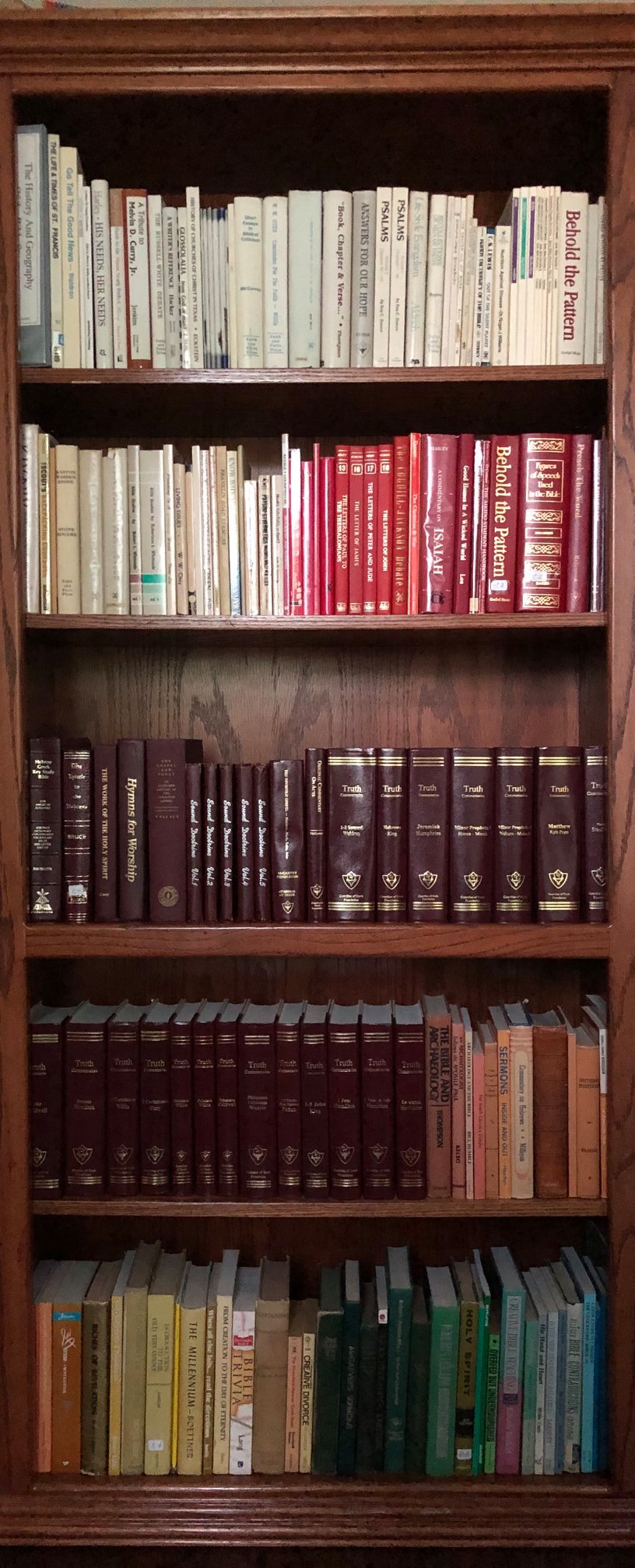
A few years back, some dude named Jared and I had a conversation about what makes a solid biblical studies library. That this video, still holds up. If you want a good list of recommended commentaries, [here’s one].
Building a library is not just about collecting books. It is about finding the right tools to help you understand Scripture more deeply and clearly. That means historical background, theology, literary structure, and, most importantly, the ability to read well. This means you are not just skimming for answers but engaging with the text.
One thing to watch early on is learning to read with discernment. No book is perfect; even the best scholars bring their assumptions to the table. The goal is not to find an author who agrees with you. It is to develop the ability to pick up what is helpful and set aside what is not, like eating fish, getting the meat, and spitting out the bones.
Start with the Basics
A solid foundation makes everything else easier. You need books that introduce the Old and New Testaments in a way that gives historical and theological context without getting lost in the weeds. A Bible atlas helps connect events to real places, turning abstract names into something more tangible. A strong hermeneutics book teaches how to read Scripture thoughtfully so you are not just absorbing information but wrestling with what the text says.
Bible software (Logos) has radically changed things up. If you do any deep study, having tagged texts, search tools, and language resources in one place saves time. And speaking of language tools, dictionaries for Hebrew and Greek can help get past the translation limitations. You do not have to be a scholar, but having access to solid resources makes a difference.
Beyond that, historical writings outside the Bible add another layer to your understanding. The Apocrypha, Pseudepigrapha, Josephus, Philo, and early church writings do not carry the authority of Scripture but help fill in the gaps. They show what people were thinking, what issues they were dealing with, and how they engaged with the world around them.
Expanding Your Library
Once you have the basics, the next step is commentaries. Not just a random stack of them but carefully chosen ones that bring something worthwhile. Some dig deep into the original languages. Others focus on theology. Some are more pastoral, helping connect the text to real life. The best approach is to mix and match, picking ones that give different perspectives without overwhelming yourself with too much at once.
Books on biblical genres are another way to sharpen your reading. The Bible is not just a single style of writing. It is poetry, narrative, law, prophecy, and wisdom literature, each with its way of communicating truth, and learning how each one works changes how you read. What makes a parable different from a historical account? How do Hebrew poets use parallelism to shape meaning? Questions like that open up whole new dimensions of the text.
Historical background resources take that even further. Knowing what happened in the ancient world when these texts were written adds layers you would not see otherwise. A good Bible dictionary rounds that out, giving quick access to reliable information on people, places, and key ideas.
Principles for Building Your Library
Not every book is worth the space on your shelf. A few excellent commentaries are better than a host of mediocre ones. A good rule of thumb is to buy ahead of your needs, getting resources that will serve long-term instead of just chasing whatever you are teaching next. At the same time, do not go too deep in one area while leaving others empty. Balance matters.
Reading broadly sharpens your understanding. Engaging with different perspectives does not mean agreeing with everything, but it forces you to think critically. That is where real growth happens.
Suggested first options:
- Mortimer Adler – How to Read a Book
- Robert Alter – The Art of Biblical Poetry
- Richard Hess – The Old Testament: A Historical, Theological, and Critical Introduction
- David deSilva – An Introduction to the New Testament: Contexts, Methods, and Ministry Formation, 2nd ed.
- Anson F. Rainey; R. Steven Notley – The Sacred Bridge: Carta’s Atlas of the Biblical World, 2nd ed.
- Christopher Hays – Hidden Riches: A Sourcebook for the Comparative Study of the Hebrew Bible and Ancient Near East
- N. Clayton Croy – Prima Scriptura: An Introduction to New Testament Interpretation
- D.A. Carson – Exegetical Fallacies, 2nd ed.
- Bruce Metzger – The Text of the New TestamentThe Text of the New Testament: Its Transmission, Corruption, and Restoration, 4th ed.
- Samuel Greengus – Laws in the Bible and in Early Rabbinic Collections: The Legal Legacy of the Ancient Near East
- Greer, Hilber, Walton – Behind the Scenes of the OT
A good library is not just a collection of books. It is a long-term investment in how you engage with Scripture. Read widely. Read thoughtfully. Let these tools push you deeper into the text and challenge you in ways you did not expect. “Whoever reads most, reads best.” Keep building.
~PW 🌮🛶
 Phillip W. Martin
Leave a comment