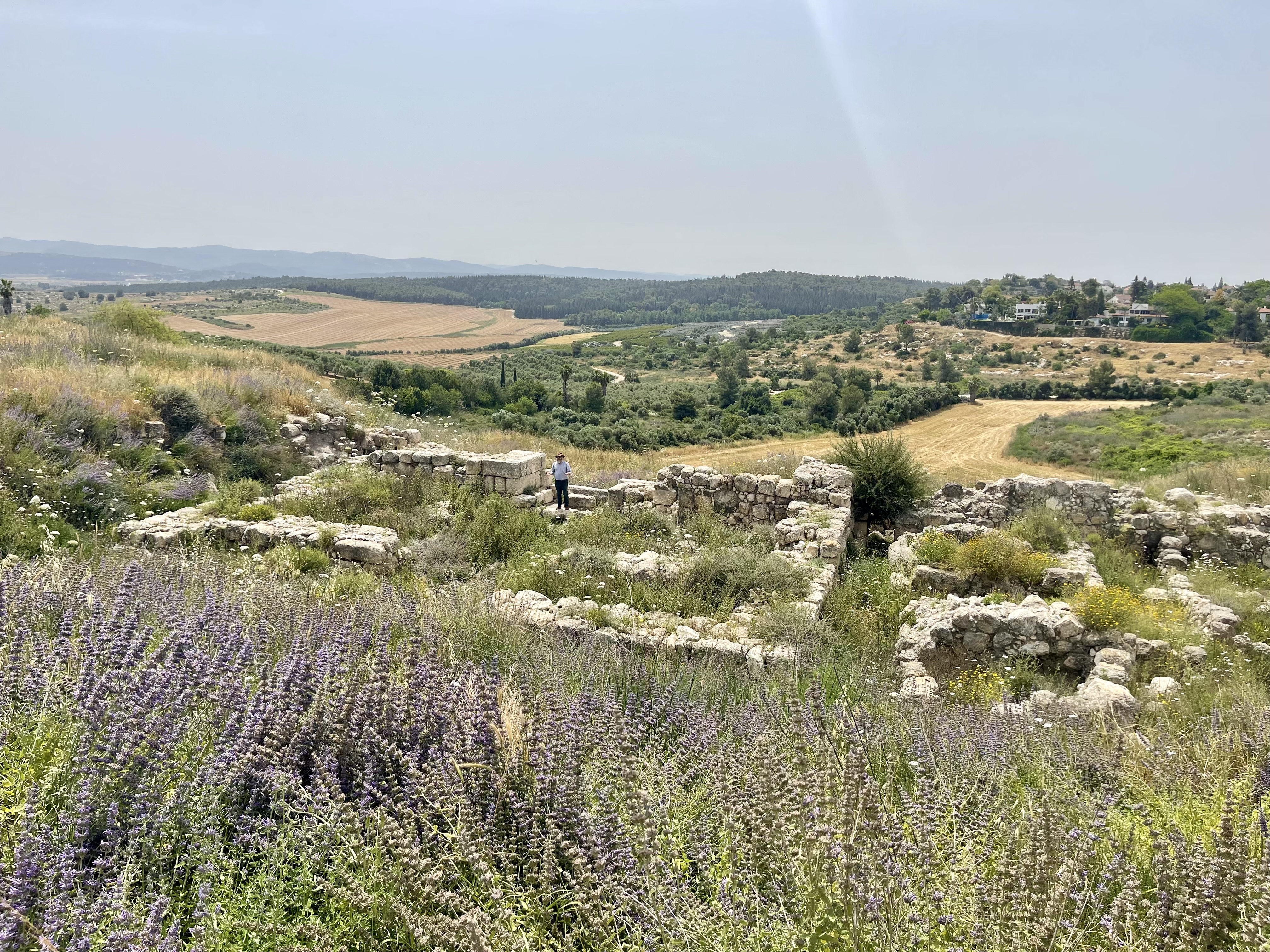
Tel Gezer (גֶּזֶר) is the site of a Canaanite city strategically located in the Shephelah region of Israel, which holds significant historical and biblical importance. The city’s location along the ancient trade route known as the Via Maris (Way of the Sea) made it a vital center for commerce and military activities. Gezer is mentioned multiple times in the Bible, referencing its conquest, fortification, and significance during different periods of Israelite history.
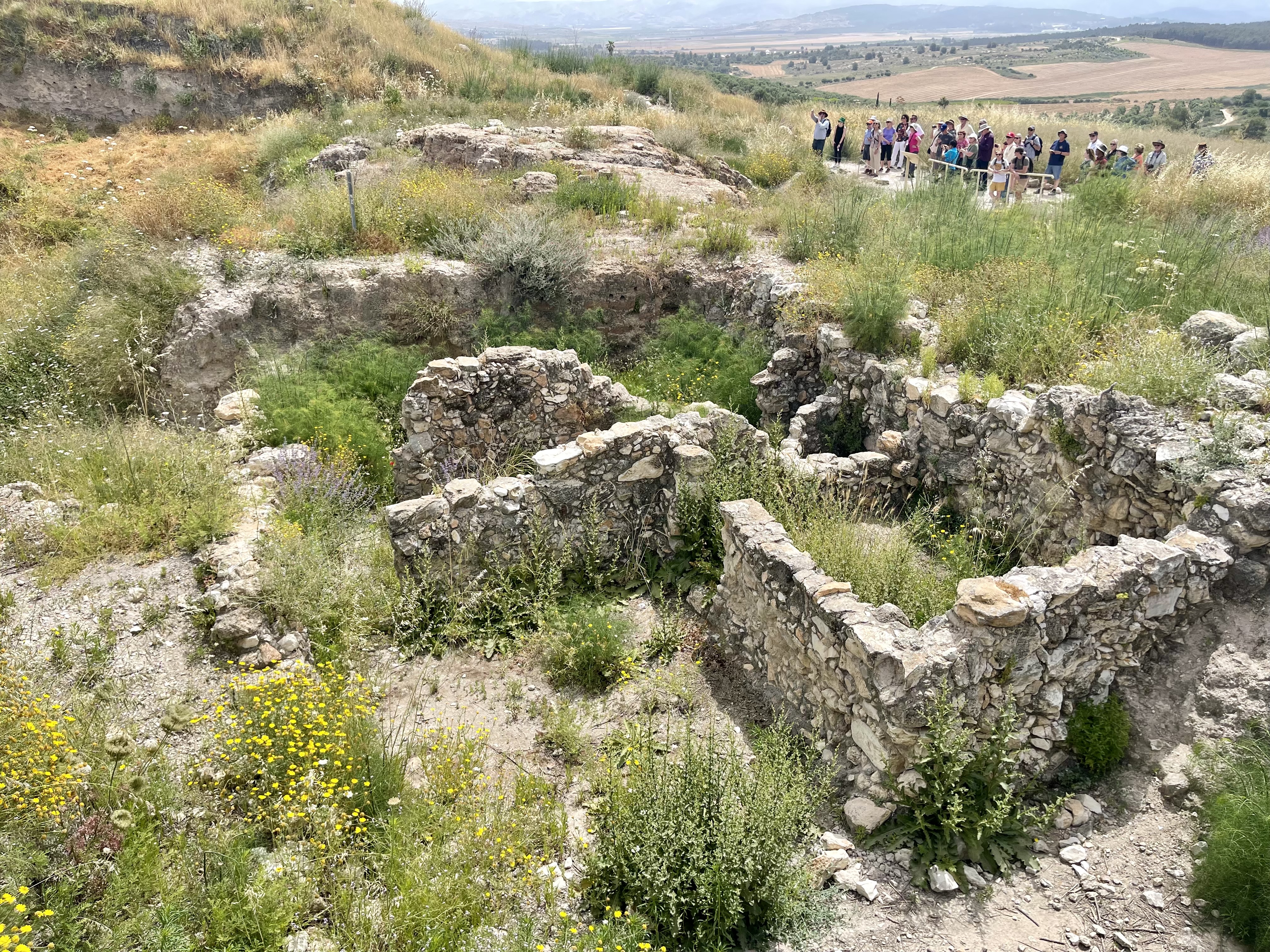
Biblical Events Associated with Gezer:
- Conquest by Joshua: Gezer is listed among the cities whose kings Joshua defeated during the Israelite conquest of Canaan (Joshua 10:33; Joshua 12:12).
- Allotment to Ephraim and the Levites: The city was initially allotted to the tribe of Ephraim and later designated as a Levitical city (Joshua 16:3, 16:10; Joshua 21:21).
- Solomon’s Fortifications: Gezer was fortified by King Solomon as part of his extensive building projects, which included other strategic cities like Hazor and Megiddo (1 Kings 9:15-17).
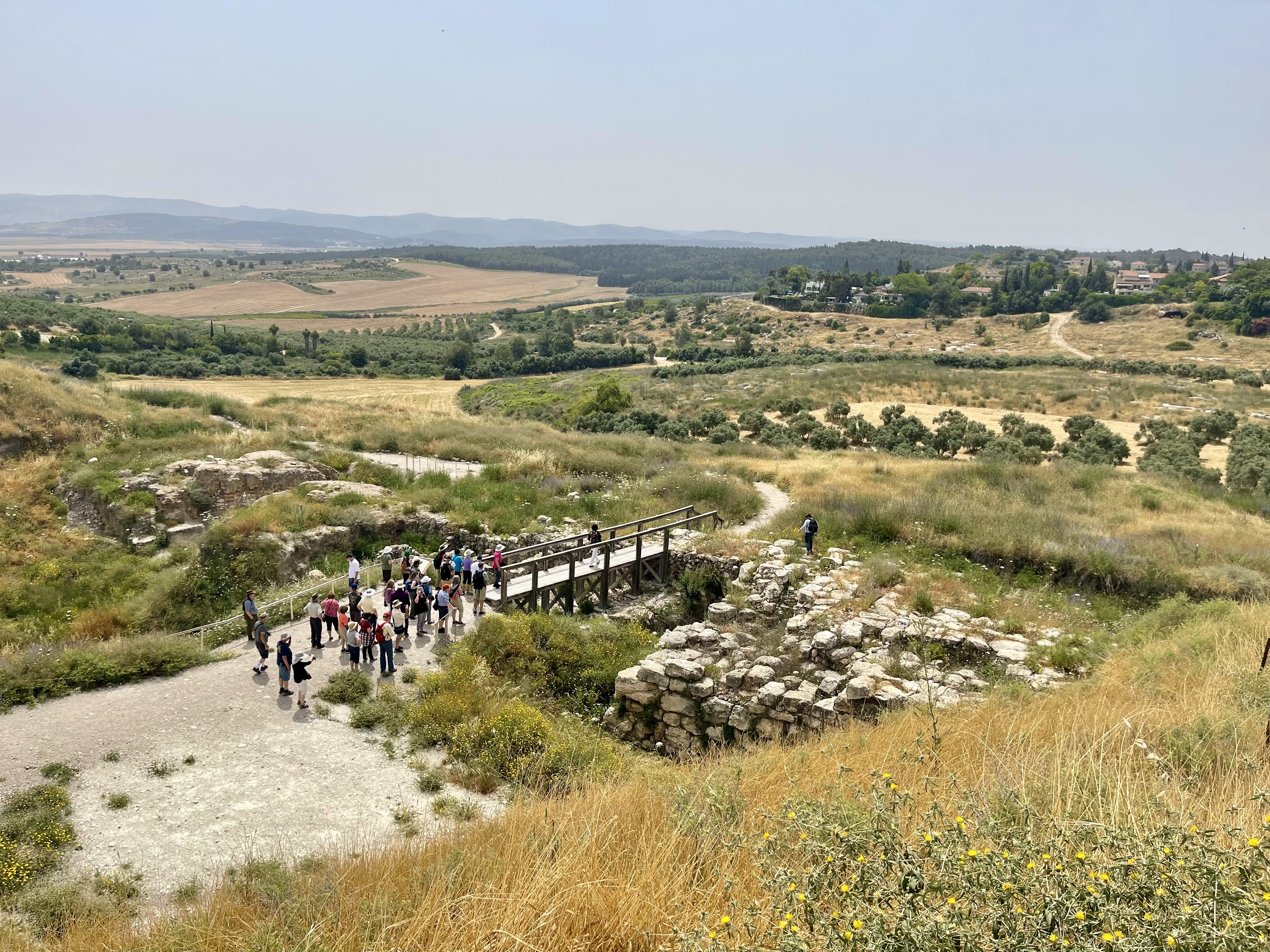
Beyond its biblical significance, Tel Gezer is renowned for its unique cultic site, an alignment of monoliths, and a basin dating back to the Canaanite period. This enigmatic site has intrigued historians and archaeologists for over a century, with theories suggesting its use for sealing alliances or as a center for various cultic practices.

Timeline of Discoveries and Excavations at Tel Gezer
- 1902-1905: R.A.S. Macalister conducted the first major excavations at Tel Gezer on behalf of the Palestine Exploration Fund. Macalister uncovered significant remains, including fortifications and water systems. However, his methods were later criticized for their lack of precision.
- 1919-1924: Raymond-Charles Weill’s unpublished digs. His assistant Paule Zerlwer-Silberberg died in occupied France, and the data was lost. In 2012, Silberberg’s lost Master’s Thesis was published.
- 1957-1973: G.E. Wright, William Dever, and Joe Seger led renewed excavations under the auspices of the Hebrew Union College. These excavations focused on clarifying the site’s stratigraphy and chronology, revealing multiple occupational phases from the Bronze Age through the Iron Age.
- 1964: The discovery of the Gezer Calendar, one of the oldest known examples of Hebrew writing, provided crucial insights into ancient Israel’s agricultural practices and calendar system.
- 2006-Present: The Tel Gezer Excavation Project, directed by Steve Ortiz and Sam Wolff, has continued to excavate, uncovering essential features, including city gates, defensive structures, and residential areas. These efforts have provided a more comprehensive understanding of the site’s historical and cultural development.
~PW 🌮🛶

References
- Biblical Archaeology Society. (2021). The Solomonic Gate at Gezer. Retrieved from biblicalarchaeology.org
- Dever, W. G. (2001). What Did the Biblical Writers Know and When Did They Know It? Eerdmans Publishing Company. Ortiz, S. M., & Wolff, S. R. (2017).
- Tel Gezer Excavations 2006–2015: The Transformation of a Border City. The Shephelah during the Iron Age, 61–102. Macalister, R.A.S. (1912).
- The Excavation of Gezer. Palestine Exploration Fund.
 Phillip W. Martin