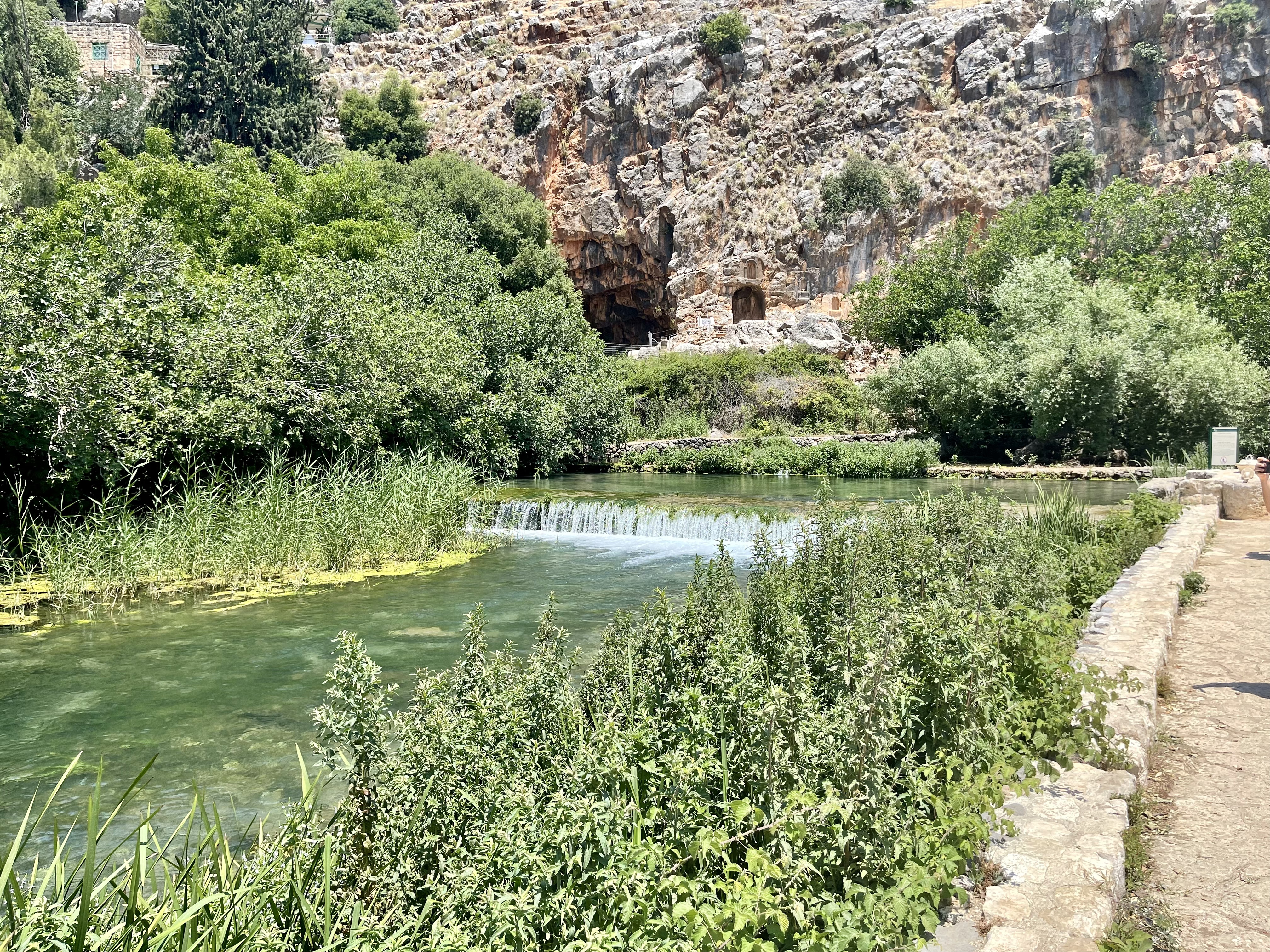
“Now it happened that as he was praying alone, the disciples were with him. And he asked them, “Who do the crowds say that I am?” And they answered, “John the Baptist. But others say, Elijah, and others, that one of the prophets of old has risen.” Then he said to them, “But who do you say that I am?” And Peter answered, “The Christ of God.”” (Luke 9:18–20, ESV)
In a decisive moment that feels as deep as the geological layers of Caesarea Philippi itself, Peter declares Jesus as the Messiah, the “Son of the living God.” This scene unfolds at the southern base of Mount Hermon in the Anti-Lebanon range, rich in religious history and stunning natural beauty, marked by limestone, shale, and basalt. Historically called Paneas, the site was later known as Caesarea Philippi, named so in the first century AD. It’s karstic landscapes channel rainwater into vast underground reservoirs and source the Jordan River—a fitting setting for new beginnings.
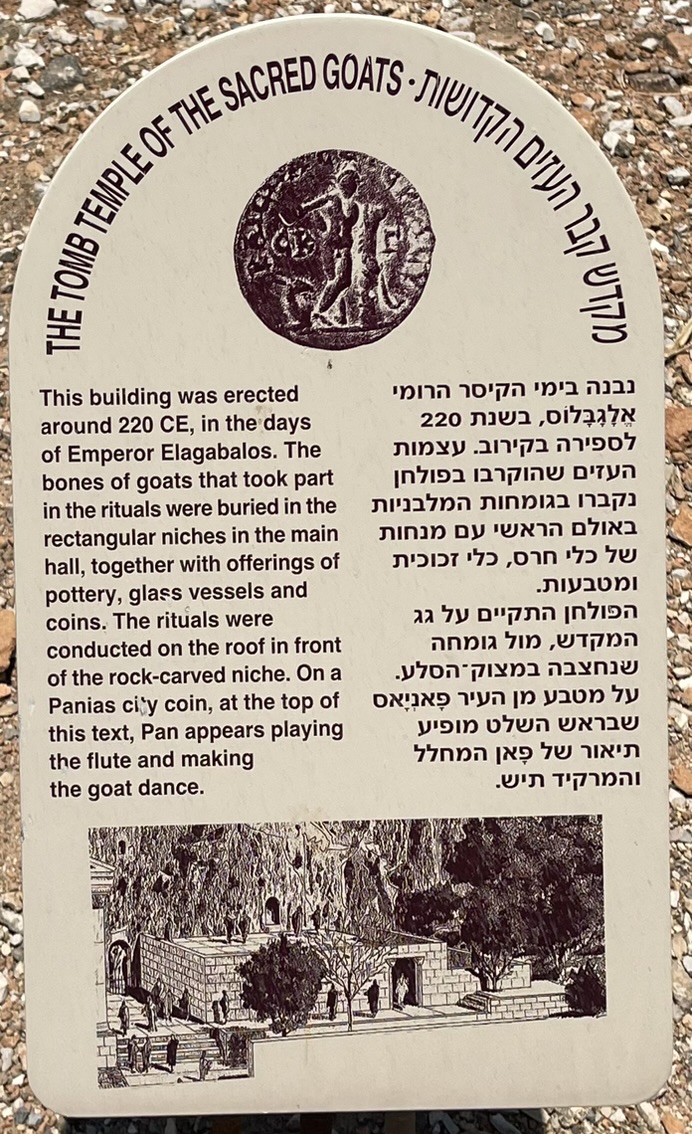
This place, long a magnet for communities from the ancient tribe of Dan to the eras of Greek and Roman dominance, saw figures like Herod the Great erecting temples and ushering in significant cultural transformations, including its renaming to Neronias by Agrippa II in homage to Emperor Nero. Yet, despite its later Christian significance, post-Arab conquest, it reverted to its old name, Banias.
Near this very spot, with a dramatic rock face carved with images of pagan gods as the backdrop, Jesus makes a declaration that’s not just geographical but deeply symbolic. He connects Peter’s name, Petros—a small stone—to the bedrock strength of the church, proclaiming, “You are Peter, and on this rock I will build my church.” This assertion sets the church in stark opposition to the “gates of Hades,” highlighting the fleeting nature of the pagan worship in contrast to the enduring truth of Jesus’ proclamation.
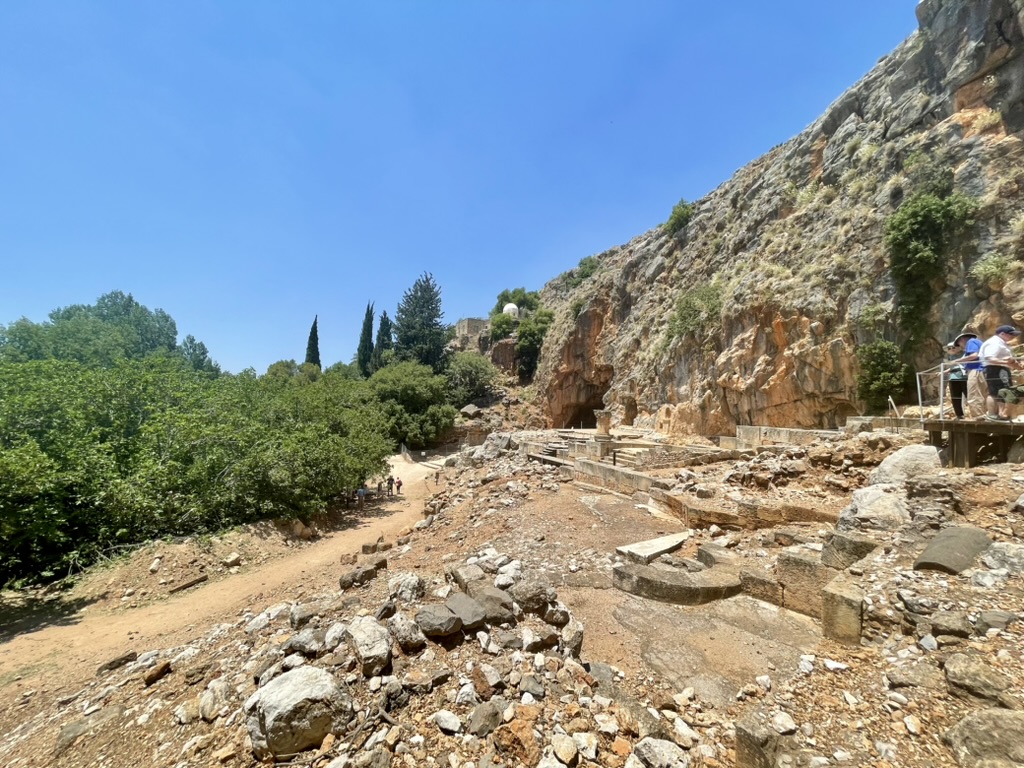
The challenge Jesus lays down here, amidst entrenched pagan worldviews, gains even more weight during his transfiguration on a nearby high mountain, likely Mount Hermon. Witnessed by Peter, James, and John, this transfiguration revealed Jesus’ divine glory. It prefigured his journey towards his departure in Jerusalem, reshaping their expectations of messianic deliverance.
By affirming Peter’s declaration as divinely revealed, Jesus ignited a spiritual revolution poised to reshape the cultural-religious landscape; he was setting the stage for his radical teachings and, ultimately, his crucifixion. From a bold declaration through divine transfiguration, this thread captures a critical phase in Jesus’ ministry, shining a spotlight on the transformative power of his words and actions in a world ready for change. He would then “…set his face to go to Jerusalem.” (Luke 9:51b)
~PW 🌮🛶
 Phillip W. Martin
Leave a comment